

The Courts of Law and Public Opinion — The Nuanced Intersection
By Rob Weinhold | Founder & Chief Executive, Fallston Group, LLC
“It’s not IF crisis will strike. It’s WHEN.
The question is: Are you ready to meet the moment?”
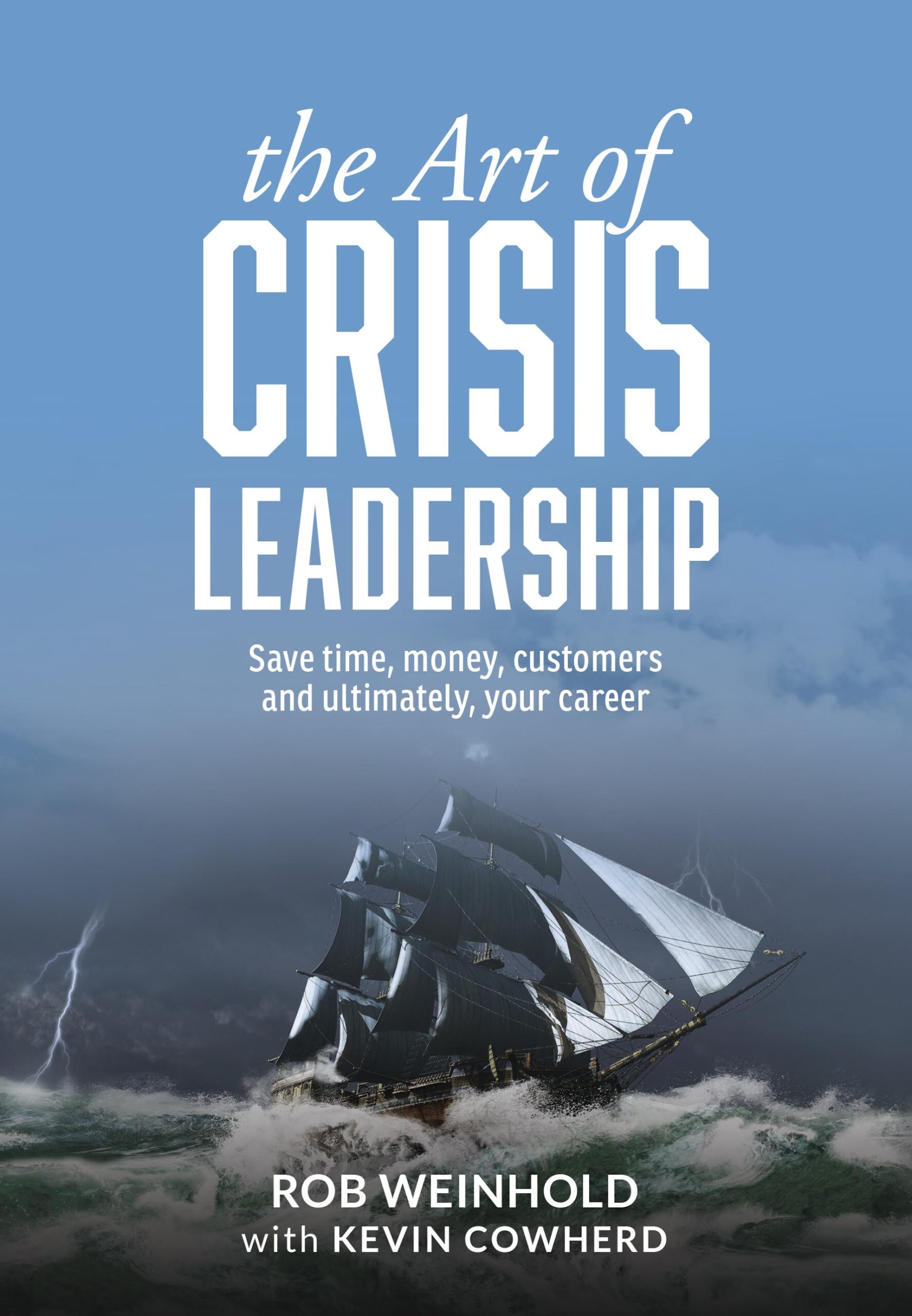
Ten years ago, my book, The Art of Crisis Leadership, was published. I wrote it after decades of tough experience — as a Baltimore Police Officer, as a public and private sector executive, and as the founder of Fallston Group, LLC, where our mission has always been to help leaders prepare for, navigate through, and recover from life’s most critical moments.
A decade later, the world looks different. Social media has accelerated. Crises have multiplied. The pressure on leaders has never been more intense. The universe has shifted and is operating at Mach a million.
And yet — the principles that guide leaders through sensitivity, adversity, and crisis? Those haven’t changed at all.
That’s the nature of timeless wisdom: it holds up. That was my intention when I wrote the book. Grounded in real case studies — from a Baltimore restaurateur fighting for her business’s survival to executives navigating public scandal and natural disaster — every story in those pages carries one central truth: resilience is built, not born.
Why This Matters to Legal Professionals, Among Others
There is a natural tension between the courts of law and public opinion, and I believe they must influence and support each other. Attorneys are uniquely positioned at the crossroads of crisis and leadership. You advise clients during their most vulnerable moments — reputational threats, regulatory investigations, workplace crises, litigation risks, and leadership failures. In many ways, you are the first call when a crisis occurs.
Understanding how leaders think, communicate, and behave under pressure isn’t just useful context — it directly influences legal strategy, client counseling, and outcomes. The five principles below are derived from the book and nearly forty years of experiential knowledge. They are just as powerful in the boardroom as they are in the courtroom.
Five Timeless Principles of Crisis Leadership
1. ‘If You Don’t Tell Your Story, Someone Else Will. And, When Someone Else Tells Your Story, it Certainly Won’t be the Story You Want Told.’
In a crisis, a communications vacuum is never truly empty. It fills — rapidly — with rumor, speculation, and your detractors’ narrative. The story will be told. The only question is whether you’re the one telling it.
Effective crisis communication requires speed, credibility, and authenticity. Not perfection. Not a polished press release. Speed and sincerity almost always outperform a delayed, lawyered statement — even when the full facts aren’t yet known. Leaders who go silent, hoping the story will pass, routinely find that silence becomes the story.
2. Short-Term Adversity Is Long-Term Advantage
The leaders who emerge stronger from a crisis are those who embrace the pressure rather than hide from it. This is deeply counterintuitive — and it is one of the most powerful insights in the book.
Crisis, met with courage and competence, becomes a growth strategy. Stakeholders, clients, employees, and the public do not expect perfection. They expect leadership. They watch how you respond. Organizations that navigate adversity with grace frequently emerge with stronger brands, deeper client loyalty, and more committed teams than those that were never tested.
3. You Can Delegate Authority, But Never Accountability
When things go wrong — and in organizational life, they will — people watch how those at the top respond. Owning responsibility, with honesty and dignity, is the fastest path to rebuilding trust. Deflecting, minimizing, or passing blame to subordinates is among the most destructive moves a leader can make.
Everything a leader does in crisis is ultimately about marketplace trust — with employees, clients, regulators, and the public. Trust, once damaged, is extraordinarily difficult to rebuild. But leaders who stand up and own their failures, honestly and without excuse, almost always recover faster than those who try to minimize or redirect.
4. Be Painfully Honest and Direct
People in crisis do not need sugar-coating. They need clarity and a path forward. There is no greater trust-builder than truth — delivered with compassion.
Vague, hedged, or evasive communication in a crisis almost always makes things worse. Audiences are sophisticated. They detect evasion immediately, and they punish it. The leader who steps forward with difficult truths — “Here is what happened. Here is what we know. Here is what we are doing.” — consistently outperforms the one who delays, qualifies, and minimizes.
5. Presence Matters More Than Polish
Whether you are a CEO facing a reputational crisis or a leader supporting a team through trauma, showing up — physically, emotionally, and authentically — is a superpower. I call it the “essence of presence.”
In the age of digital communication, the temptation to manage crises from behind a screen is powerful. Resist it. The leader who shows up — at the site of the crisis, in front of the camera, in the room with frightened employees or consumers — sends an unmistakable signal: I am here. I am accountable. I care.
A Decade Later: The Work Continues
Ten years after the publication of The Art of Crisis Leadership (2016), I am more committed to this work than ever. Every day, Fallston Group walks alongside leaders facing their defining moments — regulatory investigations, executive transitions, cyberattacks, natural disasters, public scandals, and team trauma.
What I’ve learned — reinforced by hundreds of case studies — is that the organizations and leaders who invest in crisis preparedness before the storm hits are categorically better positioned than those who scramble when it arrives. The principles in this book are not theoretical. They are operational based on lived experiences.
Crisis is not a question of if. It never was. The only question that has ever mattered is: Are you ready to meet the moment? Learn more at www.fallstongroup.com.
Rob Weinhold
Founder & Chief Executive, Fallston Group, LLC
Former Baltimore Police Officer | Crisis Leadership Author | Executive Advisor
The Art of Crisis Leadership is available through major booksellers. For speaking engagements, executive workshops, or crisis preparedness consulting, contact Fallston Group, LLC.
