

The Silent Crisis: Violent Content on Digital Platforms Affecting Our Children
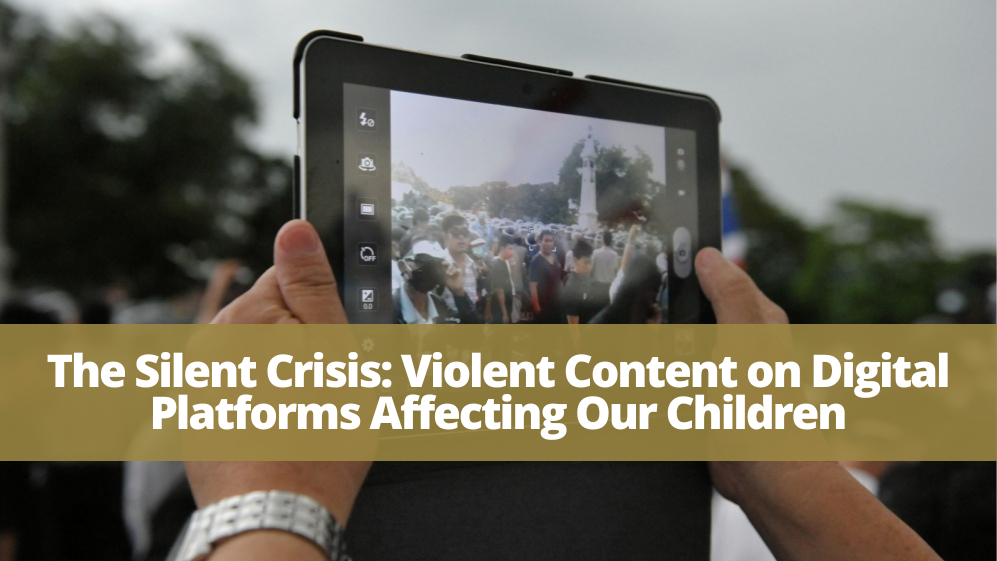
As a former Baltimore Police Officer, I have personally witnessed too many homicides, shootings, attempted murders, and horrific violent crimes during my time on the street. I’ve also, like all police officers across the country, helped many victims in the brutal aftermath. These experiences, which many would call overexposure, change the way you think, feel, and act. That said, this was the career I chose, and despite being exposed to the very worst of humanity, I also saw the very best along the way, sometimes within the same hour. These experiences typically involved ordinary people being thrust into extraordinary situations. As police officers, we were selected, trained, and often had one another to share the hardships, albeit traumatic by most standards. We were prepared for these lived experiences, but young people, through their digital experiences, are not. In our interconnected digital world, our youth are increasingly exposed to the harmful effects of social media, gaming, and other online platforms. Managing social media laws and oversight is an arduous, long-term effort, so we must focus on what we can control rather than what we cannot. Returning to a core principle I taught rookie officers: “You’re going to see some things out here you never imagined possible. Remember, the violence you see is going to happen whether you are here or not. Your job is to show up as the very best version of yourself to help people through life’s most difficult times, as a professional who is both safe and trusted by everyone you encounter.” Again, focus on what you can control. When Violence Goes Viral We live in an age where tragedy doesn’t just happen – it’s broadcast, shared, and replayed across every screen – the velocity of violence on our kids’ screens is unrelenting. Consider three recent events that shook communities and then ricocheted across the digital world: In Minneapolis, during a morning Mass at Annunciation Catholic Church & School, a shooter opened fire through stained-glass windows. Two children, just 8 and 10 years old, were killed, and at least 17 others were injured before the perpetrator died by suicide. This incident occurred during the first few weeks of the 2025 school year, sparking fear among parents, students, and the broader school community nationwide. In Charlotte, North Carolina, Iryna Zarutska, a 23-year-old Ukrainian refugee, was stabbed to death in an unprovoked attack while riding a light rail train. The video captured of this brutal crime evoked strong emotions and has been played tens of millions of times worldwide. And just one day later, political commentator Charlie Kirk, who had spoken out about Zarutska’s murder, was fatally shot at a public event in Utah. His assassination circulated on social platforms before many first responders arrived. Real-time, graphic violence that young people couldn’t help but witness on their devices, over and over. These events, tragic in their own right, became digital spectacles. Children and teens didn’t have to seek them out; the videos, headlines, commentary, and e-community conversations were pushed into feeds and group chats, often before families even had time to grieve. For young people, the question is not if they’ll see violence online, it’s when. And in my view, it changes you and them. The Research Is Clear The average child now spends 6 to 8 hours every day on screens for ‘entertainment’ alone, and that’s before counting schoolwork. Over this time, exposure to violence and harmful content is not the exception; I believe it’s become the norm. A U.S. national study of 6- to 17-year-olds found that 4+ hours of daily screen time (excluding schoolwork) is strongly associated with higher odds of anxiety, depression, ADHD, and behavioral problems, with sleep disruption playing a major role. A 2023 longitudinal study of adolescents showed that increases in social media use predicted higher rates of depressive symptoms a year later. In the UK, research found that teenagers who saw real-life violence on social media (fights, weapons, assaults) were more likely to feel unsafe in their own neighborhoods. Critically, most of this content wasn’t searched for; algorithms recommended it. A 2025 study of adolescents aged 12-18 found that intense gaming habits, particularly when they interrupted daily routines, were associated with more positive attitudes toward violence. Emotional regulation and frustration tolerance were crucial factors in whether these attitudes developed. Bottom line, the digital world can amplify violence, normalize aggression, and make children feel unsafe in ways that profoundly shape their mental health and worldview. It is up to all of us to maintain healthy boundaries. So, what now? What Parents Can Do This is not simply a technology issue; it is a leadership issue for every parent, grandparent, guardian, and anyone who gatekeeps the digital space for our young people. Here are five action steps that can make a difference: Talk Early and Often Bring up events proactively. When tragedies trend online, ask your kids what they saw and how it made them feel. Discuss the distinction between truth and rumor, while providing context. Give your children the space and grace to talk about how they are thinking, feeling, and acting. Set Boundaries that Stick Limit recreational screen time. Create no-screen zones (bedrooms, dinner table) and no-screen times (before bed). These simple habits reduce overexposure and improve sleep. See What They See Occasionally, co-view videos, co-play games, or scroll feeds together. You’ll better understand their digital reality, and they’ll know you’re credible when you talk about it. You’ll see what piques their interest, where they linger, and what content they quickly scroll by. Ask for their opinion and seek to understand. Build Resilience in Daily Life Encourage consistent sleep, physical activity, and offline hobbies. Emotional resilience and healthy routines act as buffers against harmful content. Model Behavior & Values Children learn more from what we do than what we say. Show them that you, too, set limits, avoid sensational content, and focus on healthier sources of information. Remember, young people watch your feet – words without embodiment result in lost
Can an Employer Fire an Employee for Offensive Social Media Posts? Featured Blog by Howard Kurman, Founder of Offit Kurman
Can an Employer Fire an Employee for Offensive Social Media Posts? In an article in the September 16, 2025 edition of the Washington Post the lead paragraph read as follows: “The wave of companies and other institutions firing or suspending employees over what they’ve said in reaction to last week’s killing of conservative influencer Charlie Kirk has expanded in recent days, as some of his supporters in and outside the government amp up a push against speech they say crosses lines.” Thus, the question which arises in the minds of both employees and employers related to the voluminous publicity surrounding the recent Kirk assassination is whether an employee’s social media post which is deemed to be offensive can justify the potential termination of such employee. The short answer to this inquiry is that in the private sector, as opposed to the arena of public employment where first amendment protections may be applicable, employers have wide discretion to discipline and even fire employees for posts which are deemed to be unduly offensive, inflammatory, or violative of their cultural or internal policies. The caveat for private sector employers is that employees enjoy statutory protections under the National Labor Relations Act for speech of a political or social nature when such speech or posted comment is related to such employee’s workplace’s wages, hours or terms and conditions of employment. Furthermore, employees also enjoy protections under Title VII of the federal Civil Rights Act if, for instance, their social media posts protest discrimination in the workplace, when that alleged discrimination refers to any protected status, such as religion, national origin, race, disability, etc. Private employers would be well-advised in this incendiary political climate to analyze each situation based on the facts and circumstances of the post in question, and to evaluate whether such post is violative of its internal policies, is deemed to be overly inflammatory and/or offensive to a person(s), is disparaging or defamatory to the employer or its employees or customers, is damaging to the company’s reputation or cultivated image, or is deemed to be simply inconsistent with civilized and acceptable societal discourse. In any situation where termination may be predicated upon a social media post and where uncertainty may exist regarding potential legal exposure and/or a looming public relations crisis, it is always advisable for the employer to consult with competent employment counsel and/or a public relations crisis expert, like Fallston Group. Leadership extends beyond the workplace. For a broader look at how leaders can navigate the challenges of today’s digital world, read our companion blog: The Perils of Digital Exposure. Howard Kurman is a founder of Offit Kurman, a top 200 national law firm. He is a principal in the firm’s labor/employment practice and regularly counsels employers on all facets of employment and labor relations law and practice. To contact Howard he may be emailed at hkurman@offitkurman.com, or by phone at his office: 410-209-6417.
Lessons from a Legacy: Honoring My Father’s Impact

I buried my father, Neil Gollogly, last month. He was a former fire chief in our hometown of Millwood, New York. Although I did not follow in his footsteps and join the fire service, the lifetime of lessons I learned from him has helped shape me into a curious, confident woman, the perfect combination for a journalist. These same attributes have also helped me launch my second career as a communications strategist. Lesson #1: Calm Amid Chaos We had a fire scanner in our dining room, and every time it blared, signaling K-R-S-2-2-9-Millwood, we knew my father would be heading out the door. Neil Gollogly was a calm man, an essential quality in every aspect of life, from personal relationships to professional interactions. We teach top executives to pause and take a moment to de-escalate situations. Remaining calm is a skill that requires practice. Lesson #2: A Community Leader My father was not just a beloved fire chief but also a mentor to countless people in our town. His legacy extends beyond the Millwood Fire Company; Neil Gollogly also impacted other first responders and emergency service organizations in the region. An effective leader leads by example. When Millwood needed a new firehouse, my dad gathered a few key people around a table and launched a grassroots campaign. He exemplified the mantra, “Be the change you want to see in the world.” Lesson #3: Effective Communication In his 92 years of life, my father taught me that effective communication is the cornerstone of any successful endeavor, especially in the high-pressure world of first responders, where decisions need to be made quickly. As a parent, he was also a Master of Communication strategies. He was always compassionate when I made a mistake and knew how to wield the power of a strong, silent pause when I was in trouble. Sometimes, the most effective communication is that silent, powerful moment where truth lingers in the air. As we honor my father’s legacy, let’s prioritize communication as a vital skill that shapes not just first responders, but anyone striving to make a difference. By engaging with and nurturing our communities, we ensure that the spirit of optimism and togetherness endures for generations to come.
Crisis Leadership: The Hidden Catalyst for Growth
It may seem counterintuitive, but crisis is not the enemy of progress—it’s often the spark that fuels it. In a world driven by relentless competition, digital disruption, and changing consumer expectations, crisis is not only inevitable—it’s essential. The real question leaders must ask is not if crisis will strike, but when. And more importantly: are you ready to meet the moment? Well-built organizations don’t just endure crisis—they invite it. They understand that when disruption hits, it reveals character, clarity, and competitive advantage. According to PwC’s 2023 Global Crisis Survey, 96% of organizations experienced at least one crisis in the past two years. Yet nearly 70% of those who were well-prepared emerged stronger. Crisis whittles down the marketplace—removing the fragile and reaffirming the future-ready. Darwinism is alive and well in today’s digitized world. Organizations either adapt—or disappear. But readiness doesn’t happen by accident. Leaders must treat crisis readiness as a core strategic investment—not an afterthought. This begins with a comprehensive reputational risk assessment to identify the threats that could compromise your brand, operations, and long-term viability. From there, organizations must build customized crisis plans—not templated checklists, but living, breathing playbooks that reflect your values, people, and culture. And most critically: you must train – how you practice is how you will play under duress. You must pressure test these plans under simulated, real-world conditions. Just like elite athletes or military teams, crisis-ready organizations drill until muscle memory kicks in. Because when the pressure is on, you don’t rise to the occasion—you fall to the level of your training. Fallston Group helps you achieve the organizational memory needed to turn short-term adversity into long-term advantage. Not being prepared in this day and age is utterly unacceptable as anyone with an internet connection and recording device can wreak havoc on your brand. Crisis is not a pitfall. It’s a proving ground. A growth strategy in disguise. The question is not whether crisis will find you—it’s whether you’ll be ready to lead when it does. Those who plan, train, and act decisively don’t just survive—they set the new standard for excellence. Remember, reputation leads to trust, and trust leads to valuation. And not all currency is financial. Invest in your readiness now to ultimately preserve your time, money, consumer confidence and career. Your reputation and your future depends on it.
Honored and Rooted: Fallston Group Recognized Among Greater Baltimore’s Top Family-Owned Businesses

Fallston Group is grateful to announce that the Baltimore Business Journal has recognized us as one of Greater Baltimore’s top family-owned businesses for 2025! This honor, part of the BBJ’s annual Family-Owned Business Awards, celebrates companies that have demonstrated excellence, innovation, ethics, and philanthropy—qualities we strive to embody every day. We are especially grateful to stand alongside other businesses that, like us, have put down deep roots in Maryland and built trust across generations. Fallston Group was founded with a simple but powerful mission: help people during life’s most critical times – it’s baked into our DNA. As a family-owned business, we approach our work with a personal sense of responsibility—not just to our clients, but to the community we call home. Our team’s commitment to reputation management and crisis leadership isn’t just about business but legacy, accountability, and impact. Our work is more relevant than ever in today’s rapidly changing world. Trust is fragile, and brand equity can be won or lost in a single moment. We’re here to safeguard our clients’ reputations and turn short-term adversity into long-term advantage with clarity, conviction, and care. Thank you to the Baltimore Business Journal for this meaningful recognition, and congratulations to our fellow honorees. We look forward to continuing to serve our clients, partners, and the Greater Baltimore community for years to come.
The Real-World Cost of Digital Recklessness: A Call for Accountability
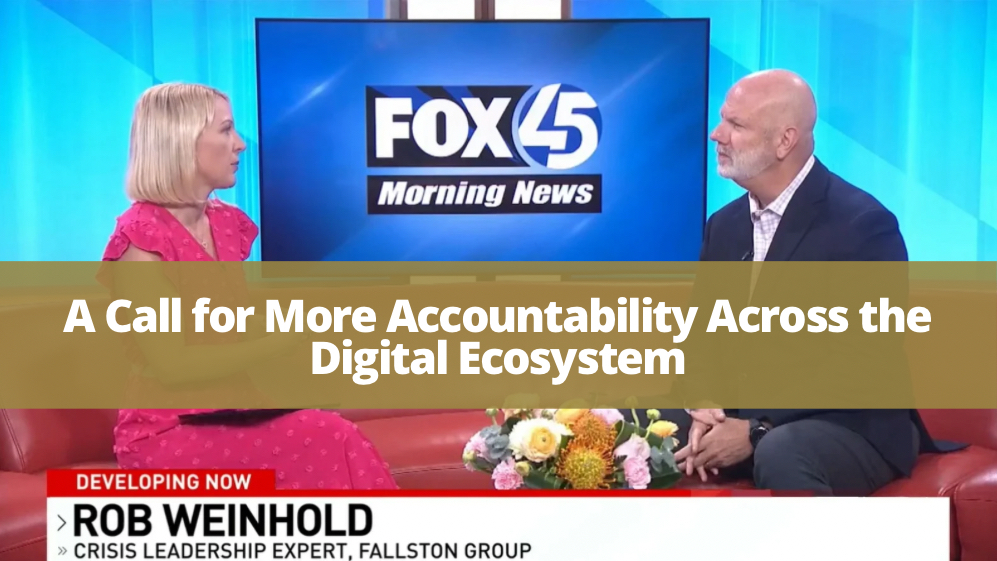
In today’s hyperconnected and always-on digital world, the viral spread of misinformation can rapidly and irrevocably damage lives. At Fallston Group, we’ve spent decades advising organizations and individuals during their most critical moments—and if one truth has become abundantly clear, it’s this: digital recklessness has very real, often life-altering consequences. The recent situation involving Mary Kate Cornett, a college freshman at the University of Mississippi, underscores the urgent need for greater accountability across our digital ecosystem. Based on publicly available reports, Ms. Cornett—by all accounts,a promising first-year business student—found herself at the center of a viral firestorm after an anonymous and unverified post was made on the YikYak platform on February 25th. What began as a baseless rumor quickly spiraled across platforms like X (formerly Twitter), drawing the attention of high-profile commentators and online audiences. Her name and likeness were circulated widely without her consent, often without credible facts. While those spreading the story may have viewed it as a moment of entertainment or gossip, the human cost to Ms. Cornett was significant and deeply personal. This moment is not about adjudicating guilt or intent—it’s about acknowledging a broader systemic and human failure. It’s a cautionary tale for institutions, influencers, and individuals alike. And it’s one of many such stories in a time when reputations can be compromised with a single click. Five Critical Crisis Leadership Observations 1. Real People, Real Pain Behind every viral moment is a real person. In this case, a young woman’s formative college experience has reportedly been upended by an untrue narrative. Reputational harm doesn’t just affect public figures—it affects students, professionals, and everyday citizens whose lives are impacted by reckless digital behavior. 2. Platforms Must Act—Swiftly and Transparently Social media companies must continue to evolve their moderation and response capabilities to address harmful content in real time. Whether it’s anonymous platforms or large-scale social networks, delayed action contributes to widespread harm. 3. Content Amplifiers Must Use Their Platforms Responsibly While sports media and digital commentary platforms play an important role in modern discourse, the line between free speech and reputational harm must be navigated with care. Those with influence must be thoughtful and discerning—particularly when discussing unverified claims involving private individuals. 4. Accountability Must Be a Shared Priority Whether through corporate governance, advertiser pressure, or public expectations, digital amplifiers must be held to higher standards. The systems that allow misinformation to thrive must be reviewed, reformed, and enforced through responsible action. 5. Digital Education Is a Survival Skill Colleges, universities, and families have a growing responsibility to educate young people about the risks of digital exposure. Media literacy, digital resilience, and reputation defense must be integrated into the student experience. These aren’t “nice-to-haves”—they’re essentials in today’s reputational landscape. At Fallston Group, we often remind our clients that reputation leads to trust, and trust leads to valuation—and not all currency is financial. In fact, in many cases, reputational currency is what opens doors, secures relationships, and sustains opportunity. To those affected by the irresponsible spread of misinformation: you are not alone. And to those with a microphone or platform—whether digital or traditional—remember that your influence is a responsibility, not a right. If you are an academic center of excellence—particularly within higher education—and wish to ensure your students and stakeholders are properly educated and protected in today’s fast-paced, high-stakes media environment, contact Fallston Group. Our crisis leadership experts can help you develop proactive training, reputational safeguards, and crisis response protocols tailored to your institution. The stakes are too high to wait. All of us must be ready to meet the moment.
Protecting Trust During Turbulence: Crisis Leadership Lessons from the 23andMe Situation
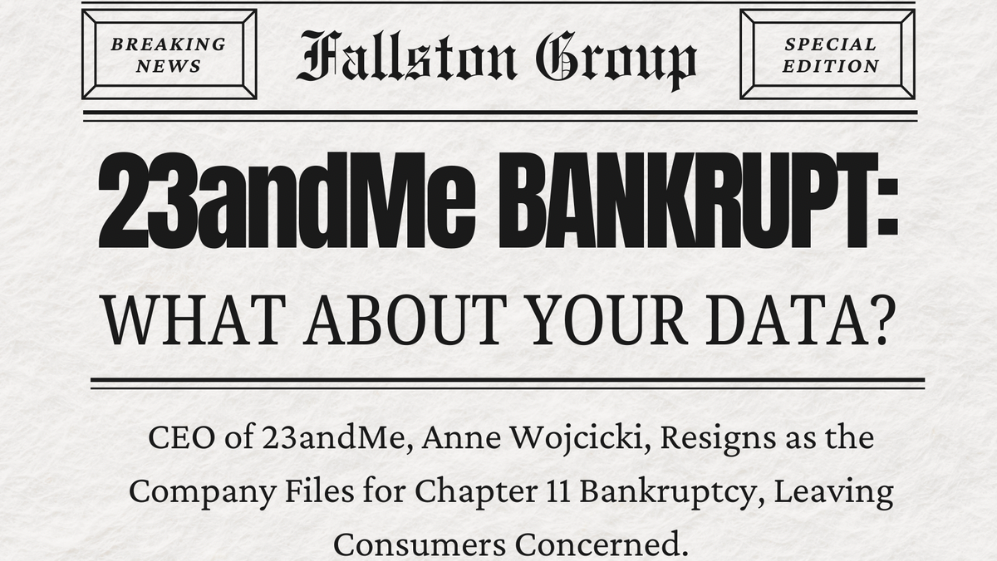
In today’s data-driven environment, few assets are more valuable—or more vulnerable—than trust. For companies entrusted with sensitive personal information, the stakes are high, especially when operational or financial uncertainty arises. The recent developments involving 23andMe serve as a critical case study in how companies must navigate crisis moments with transparency, ethical leadership, and a steadfast commitment to their stakeholders. 23andMe, known for its consumer DNA testing services, is facing a challenging chapter marked by a Chapter 11 bankruptcy filing and the unexpected resignation of its CEO. These events have understandably sparked public concern, particularly surrounding the future of the genetic data the company has collected over the years. While the company has stated that any prospective buyer must honor its existing privacy policy and comply with relevant laws, this assurance has done little to ease the minds of many customers who are unsure of what the future holds for their personal information. Although Fallston Group makes no assumptions about the internal decisions or motives of 23andMe’s leadership, the situation highlights important crisis leadership principles that all organizations—especially those managing sensitive consumer data—should consider. When customer trust is at risk, how an organization responds can either reinforce its credibility or accelerate reputational decline. The following best practices offer strategic guidance for companies in similarly high-stakes situations. Crisis Leadership Best Practices for Data-Centric Companies 1. Communicate early, clearly, and consistently When news breaks—whether through official channels or speculation—organizations must respond quickly and clearly. Proactive communication from leadership not only helps control the narrative but also reinforces that the company is engaged, responsive, and accountable. Silence or ambiguity, particularly in moments of uncertainty, can be deeply damaging to public trust. 2. Empower customer control If consumers are anxious about the future of their data, it’s critical to offer accessible and immediate options to manage, delete, or opt out. Even during complex proceedings such as bankruptcy or M&A, providing clarity around data usage and ownership demonstrates respect for customer autonomy and helps preserve long-term credibility. 3. Reaffirm original commitments—or transparently explain changes Trust is built on consistency. If a company has made commitments about data privacy in the past, reaffirming those promises publicly can provide reassurance. If changes are necessary due to evolving business circumstances, transparency is key. Clear rationale and respectful communication are essential to mitigating backlash. 4. Establish third-party oversight Independent ethics panels or data governance boards can provide unbiased oversight and bolster stakeholder confidence. Particularly during transitions of ownership or leadership, involving a credible third party adds an extra layer of accountability. 5. Prioritize people over process In crisis moments, process alone is not enough. Companies must lead with empathy and a people-first mindset, recognizing that behind every data point is a person who placed their trust in the organization. 23andMe is not the first company to face this type of reputational pressure, and it will not be the last. In fact, as more businesses collect and store personal data—whether in healthcare, finance, retail, or technology—these moments of reckoning will only increase in frequency and intensity. The lesson for all organizations is clear: ethical leadership, open communication, and values-driven decision-making are not optional—they are foundational. Companies that embrace these principles not only weather the storm, but often emerge stronger and more respected in the eyes of their stakeholders. At Fallston Group, we help leaders navigate critical moments of adversity by focusing on what matters most—reputation, trust, and the long game. Because in the end, those who lead with clarity and conviction are the ones who earn the right to lead again tomorrow. If your organization manages sensitive information and is facing—or preparing for—a high-stakes moment, now is the time to evaluate your crisis readiness. Fallston Group partners with leaders to protect reputation, preserve trust, and guide smart, strategic decisions when it matters most. Let’s talk about how we can support you.
University Presidents Must Lead with Strength During Campus Protests
In today’s charged geopolitical climate, university presidents must be prepared to manage campus protests with clarity, control, and confidence. Failure to do so can cost them their leadership post—and future job opportunities. We’ve seen this play out recently where higher education leaders were forced to step down after losing control of campus unrest. The message is clear: university presidents who fail to lead with strength and strategy risk being replaced. Leadership Begins Before the Crisis The best way to manage a protest is to prepare before it happens. Leaders must set clear expectations around free speech, protest locations, and acceptable conduct. It’s about striking a balance between allowing healthy expression and ensuring campus safety. Equally important is open communication with student leaders and faculty. I often tell my clients, “If you don’t take the time to listen before a crisis, don’t expect anyone to listen to you during one.” Building trust early can prevent protests from escalating into chaos as crises cost time, money, stakeholder trust, careers, and, in the worst of scenarios, freedom and lives. Engage local law enforcement early, they are part of the solution. Firm Boundaries No university can afford to let protests spiral out of control. That means holding people accountable when they cross the line. Harassment, bullying, and physical confrontations cannot be tolerated—period. Universities must also be extremely cautious about allowing outside agitators onto campus – many call these individuals professional protestors who often have ‘get out of jail’ strategies before being arrested. External groups generally hijack student movements, turning peaceful demonstrations into national spectacles that overwhelm leadership and damage institutional reputation while playing out on live television. Intriguing for viewership, terrible for the university. Lessons from Leadership Failures Recent history has shown what happens when presidents lose control: · Columbia University: President Minouche Shafik resigned after allowing protests to escalate, leading to mass arrests and media scrutiny. (Taheri, M. (2024, August 15). Full list of college presidents who have resigned amid campus protests. Newsweek. https://www.newsweek.com/full-list-college-presidents-who-have-resigned-amid-campus-protests-1939822) · Brandeis University: President Ronald Liebowitz stepped down following a no-confidence vote due to his mishandling of student demonstrations. (Saul, S. (2024, September 25). Brandeis president steps down amid budget issues and protests. The New York Times. https://www.nytimes.com/2024/09/25/us/brandeis-university-president-resigns.html) · Rutgers University: President Jonathan Holloway resigned as protests fueled a toxic campus environment he could no longer manage. (Rumpf-Whitten, S., & Fox News. (2024, September 18). Rutgers University president set to resign after contending with pandemic, anti-israel protests. Fox News. https://www.foxnews.com/us/rutgers-university-president-resign-contending-pandemic-anti-israel-protests?) Lead or Lose In crisis, decisive leadership isn’t optional—it’s essential. University presidents must set expectations, enforce boundaries, and maintain control. Otherwise, they will lose not only credibility but also their jobs. Leadership is about making tough calls and standing firm in the face of adversity—because when presidents lose control, everyone loses. Every member of the university community—students, faculty, and staff—deserves an environment that is both emotionally and physically safe. It is the responsibility of leadership to foster a culture where learning can thrive without fear, intimidation, or undue disruption. When working with leaders facing adversity, I often say, “I’ve never known a leader to look in the rear-view mirror and say ‘I’m sorry I made the right decision.’” The right decision starts today, before the campus protest.
Leadership in Crisis: Key Lessons from the Fatal Aircraft Accident at Ronald Reagan Washington National Airport

When crises emerge, leaders are tested in ways that define legacies. The January fatal mid-air collision at Ronald Reagan Washington National Airport (DCA) highlights the importance of swift crisis response, including transparent communication and next steps for the immediate and long-term future. There are three critical leadership considerations that emerge after such incidents. Crisis Response: The Balance Between Speed and Accuracy Immediate response is the top priority during a crisis or time of devastation. First and foremost, it involves a concerted effort to ensure the physical safety of those in the immediate area. Second, managing the coordination of communication between the stakeholders involved is critical. Each stakeholder involved has a different audience or message it needs to share. However, due to the sensitive nature of a tragic event and the regulations of the aviation industry, coordination of communication presents a two-fold challenge: Stakeholder leadership must be transparent with the public while being careful about what they say publicly to avoid inadvertently sharing misinformation and getting ahead of the investigations that will soon commence. In this case as with any aviation incident, the National Transportation Safety Board (NTSB) leads the investigation, and what is shared publicly and when, while other stakeholders, including the airline, follow suit. As discoveries are waiting to be validated, only factual information, such as initial details of the incident, such as aircraft type, flight number, and departure/destination information, can be disclosed to the public. While the public may demand immediate answers, leaders must prioritize fact-based updates over speculation. Ensuring the fidelity of the investigation is the bedrock of restoring trust and supporting the victims and people affected by the tragedy. Effective crisis leadership is distinguished by the delicate balance between speed and accuracy. When handled well, it prevents misinformation and ensures the integrity of the ongoing investigation. Transparent Communication Led with Empathy Builds Trust Silence in a crisis fuels speculation and erodes trust. Even though leaders might not initially be able to provide answers to the hard-hitting questions, there is still an opportunity to communicate clearly, consistently, and, most importantly, with empathy. This was demonstrated effectively by American Airlines’ leadership following the crash. Soon after the incident, American Airlines released a public statement acknowledging the tragedy. Within an hour, CEO Robert Isom followed the initial statement with a video briefing, openly stating that while many questions remain unanswered, he would share what he could. Acknowledging uncertainty while providing available facts is key. Nearly three weeks after the incident, American Airlines continues to post statements and responses to a dedicated part of its website to keep people informed throughout the investigation. This is essential to being perceived as transparent, which fosters confidence and accountability. Organizations that maintain this level of engagement—rather than going silent after the first wave of media coverage—while working cooperatively with the NTSB are the ones that ultimately have the highest probability of rebuilding trust and credibility in the aftermath of a crisis. Long-Term Recovery & Lessons Learned to Define Leadership Legacies Aviation disasters don’t just end with the investigation—they spark critical conversations about safety, operations, infrastructure, and policy. Leading through a crisis isn’t just about managing the immediate chaos but using the moment to evaluate and implement key findings to improve existing systems. How organizations handle the long-term emotional and operational aftermath will determine how the public perceives them, hence impacting valuation. Supporting victims’ families, first responders, and the affected community must remain a top priority long after the initial news cycle fades. The lessons learned from the investigation must lead to real change—whether that means revising procedures, air traffic control tools, training, or airspace regulations. The most recent tragic event at DCA is a reminder that leading through a crisis is more than just a first response. The best leaders don’t just survive a crisis—they lead through it and emerge stronger, over time.
“If You Don’t Tell Your Story, Someone Else Will”
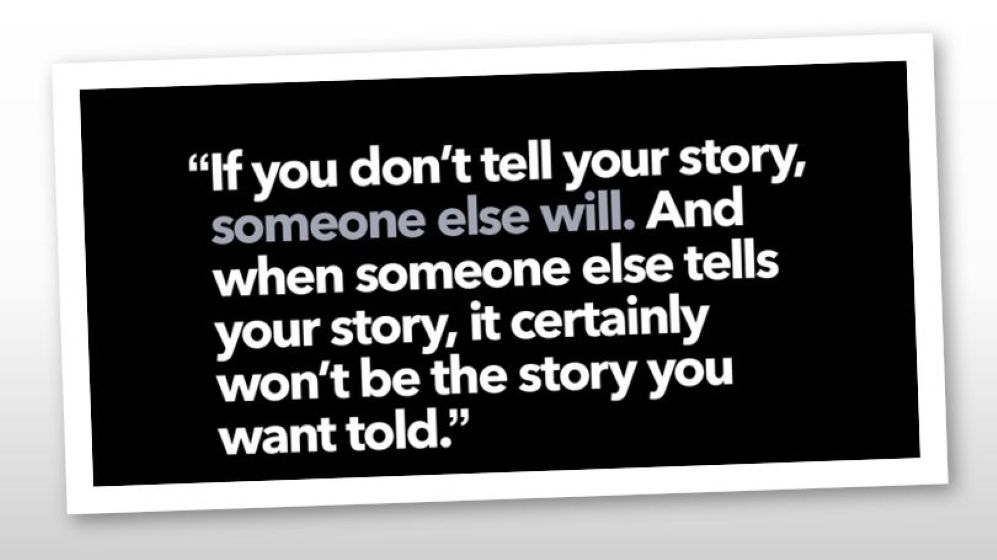
In the fast-paced digital world, perception drives reality. Whether you’re an individual, brand, or organization, the narrative surrounding your identity shapes trust, loyalty, and influence. That’s why I live by the mantra, “If you don’t tell your story, someone else will. And, when someone else tells your story, it certainly won’t be the story you want told.” This principle underscores the importance of proactive communication and reputation management. Research supports its urgency: 85% of consumers say they are more likely to trust a brand with a history of transparent communication, according to a 2022 Edelman Trust Barometer study. Conversely, 57% of people say they lose trust in organizations that remain silent during crises or controversies. Allowing others to shape your story can lead to a loss of control, misrepresentation, or even reputational harm. A Pew Research Center survey revealed that 70% of Americans encounter false or misleading information online, which amplifies the risk of your story being distorted if left untold. Effective storytelling empowers individuals and organizations to shape their legacy and influence. It’s not about spin or embellishment; it’s about authentic, consistent narratives that reflect your values and mission. For example, companies like Patagonia masterfully craft their stories around environmental stewardship, which resonates with their target audience and bolsters their brand loyalty. Telling your story proactively isn’t just a defense mechanism; it’s a strategic asset. Share your milestones, values, and contributions with clarity and confidence. Use platforms where your audience is most active—whether social media, earned media, or community engagement. The bottom line is this: silence is a story in itself, often interpreted as guilt, weakness, or indifference. Don’t leave your narrative to chance. Take control, communicate deliberately, and ensure that the story being told is the one you want the world to hear. Your reputation depends on it.
