

Tiger Woods – Legacy and Reputation
Tiger Woods is often referred to as one of the best, if not the best, player in PGA Tour history. Tiger is tied for the most PGA Tour wins with Sam Snead, and currently is second to the great Jack Nicklaus for most Majors won. His entire life is focused on winning – which is depicted in the most recent HBO (2021) documentary “Tiger.” The show is a dark look at Tiger the individual, and not just Tiger the golfer, which has his fans, other professional players, and some media crying foul. People don’t like to see the downfall of someone they cheered for and even emulated. For many years, Tiger was known as a genuine but private person, and a phenomenal golfer and athlete. His reputation was clean, and people knew Tiger was breaking racial barriers in the sport of golf. This was a guy who was and is under a microscope – and the entire world, golf fan or not, was watching him. When his personal life imploded in 2009, the court of public opinion took a hard stand. Companies and people chose to not be associated with someone who cheated on their wife, went into addictive treatment, and disappointed many in the community. When the sex scandal first hit the news, sponsors such as Gatorade and Gillette dropped Tiger as a brand ambassador, as they were aware of the impact the bad press may have on their brand acceptance. And that’s the key – whether it’s public or private corporations, pro athletes or entertainers, nonprofits or NGOs, there is an ardent responsibility (some would say an impossibility) to maintain a near-perfect image to ensure supporters stay aligned with their brands and with the individual. Unfortunately, when the video of Tiger’s DUI arrest surfaced, many who screamed his name on hole 18 were now screaming for other reasons. Fallston Group developed and routinely embraces the “15-70-15 Paradigm.” The 15% on each side of the 70% represents the unwavering ambassadors or detractors – in this case, those who will always love Tiger on one end, and those will always dislike him on the other. The 70% in the middle represents the real objective jury in the court of public opinion – those who will “render verdict” about Tiger, his brand, and his decisions, once they learn all the facts. This is generally true for any company or person who finds themselves in crisis. Very simply, reputation leads to trust and trust leads to valuation – and not all currency is financial. It does not matter how many Majors Tiger wins, or how much he donates to his charities – Tiger, at times, realized the diminished trust of his supporters, and that his valuation and reputation has suffered. And, if you’re wondering how much his reputational crisis cost – Tiger lost about $34 million in lost sponsorships according to Bleacher Report (Chriswell, 2011). It has been 12 years since the 2009 sex scandal, and HBO certainly made it clear that the public will determine Tiger’s legacy based on his actions and the inevitable impact. Ironically enough, Tiger is not the only person or entity being judged – since HBO released the documentary, the court of public opinion is again judging, this time it’s HBO, for its depiction of Tiger. Despite how negatively Tiger was positioned in the show, people will still make their own judgement about who Tiger is (and was) – a golfer, a philanthropist, a recovering addict…or maybe all these things. Tiger Woods has learned some hard lessons. Warren Buffet said it best – “It takes 20 years to build a reputation and five minutes to ruin it. If you think about that, you’ll do things differently”. And, as we say at Fallston Group: When all is said and done, what do you want to have said and done. We wish Tiger a speedy recovery so he can continue his life’s journey, filled with peace and happiness.
The Power of Crisis Leadership (Part Three)

The following is the last of three excerpts from a feature article, written by Rob Weinhold, Fallston Group Chief Executive, and published by “Captive International” in July 2020. Read part one here and part two here. Looking for ways to ensure your reputational piggy bank continues to overflow? Fallston Group offers the following guidance, based on our most powerful lessons learned over the past decade of helping clients through events of adversity: Never erode your integrity: misinformation breeds distrust. There can be an immense pressure to “make your organization look good.” Many want you to press your nose up against the ethical window of truth and transparency. Do not cave in to others who would like you to lie, distort the truth or leave vital facts behind which alter messaging and perception—this is tantamount to a lie. Once it’s lost, you will never fully restore your integrity. Be relevant: as the art of traditional and digital press relations evolves within a changing worldwide media landscape, many leaders seem less inclined to return a reporter’s calls, or otherwise seek to delay the release of information. Some view this as refusing to feed the “media monster”. By sticking their heads in the sand and not responding, businesses make themselves irrelevant and ineffective. If you don’t tell your story, someone else will. When someone else tells your story, it certainly won’t be the story you want told. Know the facts: a common mistake of many who speak publicly revolves around not fully preparing and gaining a sound understanding of the facts before articulating their position. Too many professionals jump out on camera or in front of an audience with no substantive information or an unwillingness to engage with questions. Not knowing the facts or relying on the “no comment” phrase is unacceptable. Know your position, know your craft: it’s your legacy. Be predictive: when preparing to deliver a message, be certain to plan for every question and eventuality. There is often a tendency for people to want to go on camera without fully preparing because they are used to speaking publicly or know the organization very well—chief executives are good for this. Push back and demand ample preparation. Failing to plan is planning to fail. An eight to 15-second media soundbite can ruin your career—just ask BP’s former chief executive, Tony Hayward, who recklessly uttered “I want my life back” after one of the world’s most damaging oil spills that killed 11 people in 2010. Don’t wing it; prepare for every interview no matter how mundane or harmless it may seem. Build media relationships: know those who tell your story—media and your ambassadors—as well as your detractors. You want to get the benefit of the doubt when people tell your story. It’s not about an unfair advantage, but simply balance. When managing the media, gather intelligence from reporters and news organizations—ask them what angle they plan to cover, who they are speaking with and what their position is. They are under no obligation to share these details, but you’d be amazed at what they will tell you, particularly if there is an existing relationship or future mutual need. Video doesn’t tell the whole story: a video account of what happened does not factor many variables—what each party said, body language from all angles and what transpired before and after the footage. In today’s digital world, everyone is a citizen journalist with an opinion, and many want to be the next YouTube sensation. More is recorded and shared than at any other point in history. The emergence of video has changed all professions, but be careful when making a judgement or decision based solely on video evidence. Treat video for what it is: another tool in the search for the truth. Practice, practice, practice: it is essential to practice public speaking. Practice on camera in an authentic, safe environment. Reputations on camera can save your career. Seek advice from colleagues. take a look at how others have responded during times of crisis and leverage their lessons learned to your advantage. Your colleagues, peers and competitors are invaluable pools of knowledge and can serve as the single most important case study resource. Be a student of your peer experiences and learn from other’s successes and missteps. Of the many leaders I’ve worked with during crises, there are two benchmarks of success which allow leaders to quickly maintain control and weather the storm. First, they put their hand in the air and recognize they are in trouble—they don’t let their ego get in the way. Second, they ask for help from their trusted circle. Recognition of trouble and decisiveness in action will help you turn short-term adversity into long-term advantage.
Resilient Leadership: BP and its Fallen Leader

A Perspective about BP and its Fallen Leader by Rob Weinhold When we learned of the Gulf oil explosion in April 2010, the loss of life coupled with the hourly projections about environmental fallout was disturbing enough. However, to learn that BP had no real crisis plan or immediate solution to deal with this type of incident immediately instilled a sense of anger among many stakeholders. One of the biggest “eye brow raising moments” early on was to watch BP executives on NBC’s Today Show respond to a question/statement by an anchor during an interview. The question to the executive was “You had no crisis plan to deal with this, did you?” Well, the executive did not answer the question and quickly directed his response in another direction, never answering the “yes or no” question. Clearly, BP was at a loss on how to handle this catastrophic, yet predictable event. It is true, based on the continual resulting blunders that BP did not have a handle on how to effectively communicate with all of its stakeholders during the worst oil spill in U.S. history. Adversity is the truest test of leadership and BP failed the test due to poor planning and execution. The very basic tenants of crisis leadership did not present themselves in this case. While many suffered, top executive Tony Hayward gave the public impression that he cared more about how his life was disrupted than the millions who depend on BP from a financial or livelihood standpoint. Comments Mr. Hayward made about how he “wanted his life back” or how he minimized the leak because the leak was occurring in “a big ocean” were bad enough, but the symbolic participation in a yacht race during a time of crisis sent the wrong message to many whose quality of life still remained in the balance. While Mr. Hayward apologized and made later attempts to explain his comments and actions, the court of public opinion already rendered a verdict. Of the many milestone events which ultimately led to Mr. Hayward’s dismissal, one particular event negatively impacted his career, BP’s stock and sent the BP brand cascading downward like no other. That event was the Congressional hearings where all company executives involved decided to point the finger at one another. The resulting public message was a failure to take responsibility. In fact, the President of the United States stood-up and said he was “not impressed” by that spectacle. Yes, now the leaders of three major corporations were being admonished publically by the World’s most influential leader. Main Tenants of Resilient Leadership The fact is, during times of crisis, leaders become fatigued and often misstep. In BP’s case, Hayward didn’t have what Dr.’s George Everly and Doug Strouse refer to in their book (The Secrets of Resilient Leadership, 2010) as Behavioral Body Armor. As highlighted in the book and many other publications, resilient leadership has a few main tenants which should never be violated. They include: 1. Act with integrity 2. Communicate effectively 3. Display optimistic, decisive leadership 4. Take responsibility for actions 5. Build a resilient culture 6. Develop behavioral body armor I wholeheartedly recommend that leaders at every level of management in both the public and private sector, personally or professionally, embrace these principles. Had BP crisis planned before the incident, been forthright with information and followed the six basic tenants above, we all might have a different perspective.
Four Simple Steps Tiger Took to Rebuild His Rep

When initially hearing about Tiger Woods’ major life and addiction struggles in 2009, winning a Masters green jacket a decade later was far from realistic, in everyone’s mind. In fact, Woods said at the time he would be taking an ‘indefinite break’ from golf. How did Woods achieve one of the most talked-about come-back stories? How did he regain public and corporate support while effectively nurturing a positive reputation? It wasn’t easy – but through guided steps in taking responsibility and implementing affirmative life changes, Woods was able to, again, win the Masters. Woods’ troubles began in November 2009, driving into a fire hydrant while under the influence. Sponsors such as Gatorade and AT&T immediately dropped the golfing legend due to his misbehavior off the green. Following his poor choices, he then tore his Achilles and didn’t play a full tournament until December 2016 at the Hero World Challenge. Woods’ first step towards his eventual 2019 green jacket was apologizing to fellow players and the public via US Weekly for his embarrassing decisions – step one: recognition and public apology. Through apologizing and announcing his remorse for his wrong-doings, it allowed the public to see he acknowledged his actions, and that he recognized was a dramatic need for change. Regardless of a company’s or individual’s position in the spotlight, mistakes do happen, bad choices are made and apologies can be accepted – as long as the person is truly remorseful and doesn’t repeat the bad behavior. Step two: taking action. As we all heard when we were young, actions speak louder than words. Woods apologized, and immediately completed a rehabilitation program which prompted the progress toward becoming the pro golfer we all love. This allowed fans to applaud Woods changing his moral outlook, correcting his mistakes and creating movement toward positive change. Step three: patience and persistence. Woods did not walk out of rehab and play his best 18 rounds of golf – it took time, a long time. Tiger Woods began playing in tournaments and losing – everyone thought he was finished. Effectively laying low, apologizing publicly, making efforts towards positive and sincere change and absorbing the heat of playing bad golf all enabled his eventual rebirth – adversity is advantage. This low point allowed Woods time for regrouping and confidence building as a private person and professional golfer. Step four: learn from mistakes. Woods is now coming off of his best week of golf – winning the 2019 Masters. He used his struggles as a building block in his career. He publicly discussed his come-back story and lessons learned. This created a sense of comfort and trust for fans and sponsors. Crisis isn’t easy – but if handled correctly, can be an opportunity for long-term, sustainable growth. There is no question, Tiger’s 2019 green jacket symbolized more than simply winning the Masters.
Top Business Reputation Tips
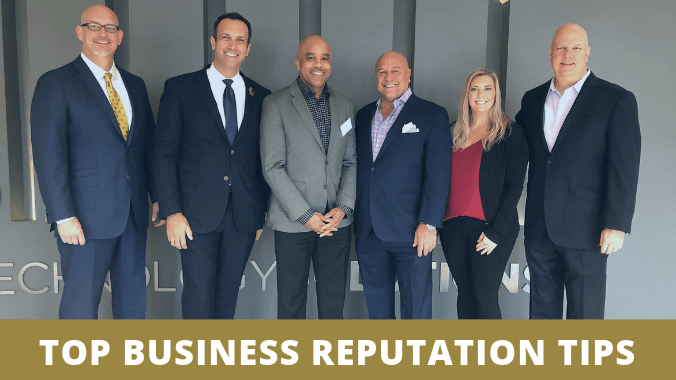
Whether or not you had the chance to attend our most recent Business Reputation Panel in person, every leader can benefit from our expert panelists’ top tips to preserve and protect your company’s reputation. James “Jef” Fagan, Principal Attorney at Offit Kurman advises businesses to not only pick a primary spokesperson – but to make certain your employees know who that spokesperson is. Legally, employees need to understand if the media calls, they should not answer any questions. If a crisis occurs, employees should be given a script for answering the phone, and direct callers to the primary spokesperson. Scott Canuel, Executive Director and Market Team Lead at J.P. Morgan explains employees must know what to expect in terms of protocol BEFORE a crisis occurs. Employees should be updated on your company’s crisis plan on a regular basis, and training must be consistent. (Fallston Group tip: this establishes organizational muscle memory and reduces stress when a crisis does occur!). Rachael Lighty, Public Relations Manager for Amazon Operations stresses that “your reputation is not a shot in time.” Your reputation must be worked on alongside your relationships with your customers and trusted advisors every single day. Think about your reputation during your everyday business decisions – it is an active ongoing process. Kai Jackson, Co-anchor at WBFF-TV Fox45 News tells us from the media’s perspective, “please know I have a job to do just like you do.” When a crisis occurs, it is extremely helpful for your company to have a point person to go to for information who can speak MEANINGFULLY about the issue. The media’s job is to report professionally and respectfully. The more substance your business can provide, the better the media will be able to represent your story. Ed Norris, radio personality and actor gives personal advice from the heart: build your relationships TODAY. And not just with your company and board’s executives, but with all of your employees. Every person matters. These relationships will benefit you in the long-term, and those people will have your back not if, but when things go sideways. Rob Weinhold, chief executive at Fallston Group, urges leaders to understand reputation leads to trust, and trust leads to valuation. And, not all currency is financial. Your reputational equity must be built BEFORE crisis strikes; your business must always be ready to make a withdrawal from your reputational piggy bank. For more information about crisis leadership strategies, how to understand your risk and how to better prepare for a crisis, contact Fallston Group at info@fallstongroup.com, call 410.420.2001 or visit our website.
Crisis Strikes: Who to Call

FACT VS FICTION: Are you at risk?

Build Your Social Champions

Some of your biggest champions during a crisis may end up being your social media followers…but waiting to build those ambassadors until crisis strikes means you’re too late to capitalize on this important communications outlet. Check out our video for some quick tips, and contact us at https://fallstongroup.com/contact-us/ or call 410-420-2001 for more information.
What’s the “Why” Behind a Crisis?
Many crises are sustained campaigns, not situational media events. In my view, reputation leads to trust and trust leads to valuation. You see, snatching victory from the jaws of defeat is all about the restoration of trust and restoring that reputational piggy bank balance which succumbed to overdraft status. We know crises can be natural, like an earthquake, or human-induced, like an egregious crime or gross mismanagement. Crises can be sudden or smoldering, high-impact or low-impact. Sometimes organizations recover. Many times, they do not. Crises can take on many forms: data breach, social media attack, negative press, natural disaster, bankruptcy, crime, litigation, investigation, compliance issues, employee relations complications, job loss, labor unrest, audit sanction, poorly managed mergers, workplace violence, terrorism, war, riots, accidents, health issues, product recall, hostile takeovers, abuse, ineffective leadership transition, and discrimination—to name some of the prominent. Life is a complex struggle at times, with a seemingly high level of unpredictability. But one thing is certain: crisis will strike. It’s not a matter of if. It’s a matter of when. In recent years alone, many high profile leaders have faced serious reputational issues that have cost them tremendous amounts of time, money, customers and, ultimately, their careers – generally in that order. And, in the worst case of scenarios, lives. In my decades of managing crisis—the overwhelming number which are human induced—I’ve found premeditated crises are deeply rooted in the issues of power, control, money, sex and revenge. Yes, these are the core motivating factors of why people do bad things. Some are driven by a singular vice, others are firing on many motivating cylinders. As wonderful as the human spirit is, there is often another side to some of us, a side in which these dark, addictive triggers become more important than life itself. And sadly, it’s generally those who orbit the lives of those in crisis—and depend on the afflicted people or organizations emotionally, financially or spiritually—who suffer the most when crisis unravels. Life lesson for today – closely evaluate who you have in your ecosystem, personally and professionally. Are the people you inherently trust with your business or reputation motivated by any of the core factors outlined above? Are they really making the right decisions for you, your business, your brand? Take a hard look at “why” these people make the decisions, or act, the way they do. You just may find that YOU need to make some tough eliminating choices as you work your way toward a more brilliant and prosperous future. To learn more about building, strengthening and defending your company’s reputation, please contact us directly at Fallston Group, or call 410-420-2001.
Lead Through Crisis; Don’t Spin!

