

What the Verizon Outage and Recent Brand Failures Teach Us About Crisis Leadership

Over the past year, a growing list of well-known brands — including Saks Global, Rite Aid, Forever 21, and Marriott — have found themselves in the headlines for bankruptcy filings, operational breakdowns, or reputational backlash. While each situation looks different on the surface, they all point to the same underlying issue: crisis leadership failures that began long before the crisis became public – a dimmer switch versus the flick of a light switch. A timely example came up last week with the Verizon wireless outage, which disrupted calling, texting, and mobile data for customers across large parts of the U.S. Phones were pushed into “SOS” mode, and for hours, millions of people were left without reliable connectivity. While Verizon worked to restore service and later offered account credits, early communication was limited, forcing customers to rely on social media and outage trackers for answers. The outage itself was disruptive — but the leadership response shaped how customers perceived the event. It felt as if many were wondering this this was a technical issue or widespread cyber-attack. This highlights a critical distinction leaders often overlook: the difference between sudden crises and smoldering ones. Research consistently shows that roughly 70–75% of corporate crises are “smoldering” issues — problems leaders were aware of, or should have been aware of, but failed to address quickly enough. These slow-burn issues don’t grab attention at first, which makes them easier to ignore — until they explode into full-scale crises. The Verizon outage may feel sudden to customers, but system vulnerabilities, redundancy planning, and response protocols are all smoldering issues (or opportunities) that require leadership attention long before something breaks. The same pattern appears in recent bankruptcies. Saks Global’s collapse followed years of mounting debt and delayed decisions. Rite Aid’s repeated financial struggles reflect unresolved operational and legal pressures. Forever 21’s decline was driven by leadership waiting too long to adapt to shifting consumer behavior. Across industries, the lesson is clear: crises are rarely caused by a single bad day. They are the result of hesitation, overconfidence, and delayed action. Leaders often move quickly when faced with dramatic, visible emergencies — but move far too slowly when the warning signs are quieter. In Fallston Group’s experience, there are often many reasons for this, including the fact that hard decisions often lead to investor backlash, stock price hits, and layoffs. Not to mention an overreliance on brand longevity and perceived marketplace power. Strong crisis leadership isn’t about perfection. It’s about early recognition, transparent communication, and decisive action. Customers, employees, and stakeholders can tolerate disruption. What they won’t tolerate is silence, confusion, or the sense that leaders failed to act when they had the chance. Again, ‘If you don’t tell your story, someone else will.’ However, our mantra taken one step further, ‘If you don’t take action, someone else will.’ In today’s environment, where a single outage or headline can redefine a brand overnight, crisis leadership is no longer optional — it’s a core responsibility of anyone in charge.
When the Cloud Breaks: Leadership Lessons from the AWS Outage
When the Cloud Breaks: Leadership Lessons from the AWS Outage During the early hours of October 20th, a major outage at Amazon Web Services (AWS) took hundreds of platforms offline and caused chaos for thousands of companies. Global brands like Snapchat, Venmo, Fortnite, Signal, and Ring were severely affected, along with UK institutions such as Lloyds Bank and HM Revenue & Customs. When the cloud goes down, the ripple effect hit with velocity and impact, and no organization is immune. Whether you are a global enterprise or a main street business, when your business continuity is disrupted, it can cost you time, money, customers, and careers. Moments like these separate reactive organizations from resilient ones. That’s why Fallston Group teaches the Resilient Moment Communications Model — a practical framework that guides leaders through the uncertainty of crisis. This model, developed by Dr. George Everly, provides a strategic communications path for leaders of every organizational shape and size. The Model suggests that if a leader answers the following five questions, at any stage of crisis, most questions that people have about an issue will have been answered: What happened? Be factual and transparent. AWS’s disruption apparently stemmed from an internal subsystem failure — not a cyber-attack. Clear early messaging prevents speculation from taking root. What caused it? Explain the root cause in plain language. Jargon confuses; clarity builds confidence. What are the effects? Acknowledge the human and business impact. From customer frustration to investor concern, empathy and accountability sustain trust. What is being done about it? Demonstrate decisive action. Communicate progress and solutions without over-promising. Precision and presence matter. What needs to be done in the future? Show learning and leadership. Strengthen systems, train teams, and rehearse responses before the next test. The AWS outage is a real-time reminder that resiliency is not just technical — it is organizational. As we say at Fallston Group, ‘you don’t spin your way through crisis; you lead your way through.’ Fallston Group helps leaders prepare for, navigate through, and recover from issues of sensitivity, adversity, and crisis — because reputation leads to trust, and trust leads to valuation. For more information, link to www.fallstongroup.com. – Rob Weinhold, Chief Executive of Fallston Group
Protecting Trust During Turbulence: Crisis Leadership Lessons from the 23andMe Situation
In today’s data-driven environment, few assets are more valuable—or more vulnerable—than trust. For companies entrusted with sensitive personal information, the stakes are high, especially when operational or financial uncertainty arises. The recent developments involving 23andMe serve as a critical case study in how companies must navigate crisis moments with transparency, ethical leadership, and a steadfast commitment to their stakeholders. 23andMe, known for its consumer DNA testing services, is facing a challenging chapter marked by a Chapter 11 bankruptcy filing and the unexpected resignation of its CEO. These events have understandably sparked public concern, particularly surrounding the future of the genetic data the company has collected over the years. While the company has stated that any prospective buyer must honor its existing privacy policy and comply with relevant laws, this assurance has done little to ease the minds of many customers who are unsure of what the future holds for their personal information. Although Fallston Group makes no assumptions about the internal decisions or motives of 23andMe’s leadership, the situation highlights important crisis leadership principles that all organizations—especially those managing sensitive consumer data—should consider. When customer trust is at risk, how an organization responds can either reinforce its credibility or accelerate reputational decline. The following best practices offer strategic guidance for companies in similarly high-stakes situations. Crisis Leadership Best Practices for Data-Centric Companies 1. Communicate early, clearly, and consistently When news breaks—whether through official channels or speculation—organizations must respond quickly and clearly. Proactive communication from leadership not only helps control the narrative but also reinforces that the company is engaged, responsive, and accountable. Silence or ambiguity, particularly in moments of uncertainty, can be deeply damaging to public trust. 2. Empower customer control If consumers are anxious about the future of their data, it’s critical to offer accessible and immediate options to manage, delete, or opt out. Even during complex proceedings such as bankruptcy or M&A, providing clarity around data usage and ownership demonstrates respect for customer autonomy and helps preserve long-term credibility. 3. Reaffirm original commitments—or transparently explain changes Trust is built on consistency. If a company has made commitments about data privacy in the past, reaffirming those promises publicly can provide reassurance. If changes are necessary due to evolving business circumstances, transparency is key. Clear rationale and respectful communication are essential to mitigating backlash. 4. Establish third-party oversight Independent ethics panels or data governance boards can provide unbiased oversight and bolster stakeholder confidence. Particularly during transitions of ownership or leadership, involving a credible third party adds an extra layer of accountability. 5. Prioritize people over process In crisis moments, process alone is not enough. Companies must lead with empathy and a people-first mindset, recognizing that behind every data point is a person who placed their trust in the organization. 23andMe is not the first company to face this type of reputational pressure, and it will not be the last. In fact, as more businesses collect and store personal data—whether in healthcare, finance, retail, or technology—these moments of reckoning will only increase in frequency and intensity. The lesson for all organizations is clear: ethical leadership, open communication, and values-driven decision-making are not optional—they are foundational. Companies that embrace these principles not only weather the storm, but often emerge stronger and more respected in the eyes of their stakeholders. At Fallston Group, we help leaders navigate critical moments of adversity by focusing on what matters most—reputation, trust, and the long game. Because in the end, those who lead with clarity and conviction are the ones who earn the right to lead again tomorrow. If your organization manages sensitive information and is facing—or preparing for—a high-stakes moment, now is the time to evaluate your crisis readiness. Fallston Group partners with leaders to protect reputation, preserve trust, and guide smart, strategic decisions when it matters most. Let’s talk about how we can support you.
“If You Don’t Tell Your Story, Someone Else Will”
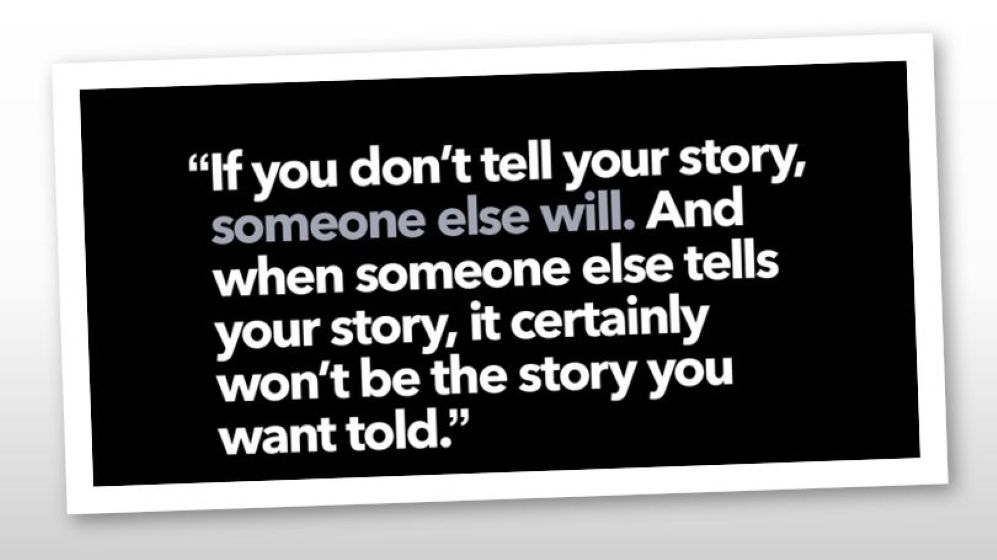
In the fast-paced digital world, perception drives reality. Whether you’re an individual, brand, or organization, the narrative surrounding your identity shapes trust, loyalty, and influence. That’s why I live by the mantra, “If you don’t tell your story, someone else will. And, when someone else tells your story, it certainly won’t be the story you want told.” This principle underscores the importance of proactive communication and reputation management. Research supports its urgency: 85% of consumers say they are more likely to trust a brand with a history of transparent communication, according to a 2022 Edelman Trust Barometer study. Conversely, 57% of people say they lose trust in organizations that remain silent during crises or controversies. Allowing others to shape your story can lead to a loss of control, misrepresentation, or even reputational harm. A Pew Research Center survey revealed that 70% of Americans encounter false or misleading information online, which amplifies the risk of your story being distorted if left untold. Effective storytelling empowers individuals and organizations to shape their legacy and influence. It’s not about spin or embellishment; it’s about authentic, consistent narratives that reflect your values and mission. For example, companies like Patagonia masterfully craft their stories around environmental stewardship, which resonates with their target audience and bolsters their brand loyalty. Telling your story proactively isn’t just a defense mechanism; it’s a strategic asset. Share your milestones, values, and contributions with clarity and confidence. Use platforms where your audience is most active—whether social media, earned media, or community engagement. The bottom line is this: silence is a story in itself, often interpreted as guilt, weakness, or indifference. Don’t leave your narrative to chance. Take control, communicate deliberately, and ensure that the story being told is the one you want the world to hear. Your reputation depends on it.
The Calculated Gamble of Record-Setting Deals in Professional Sports
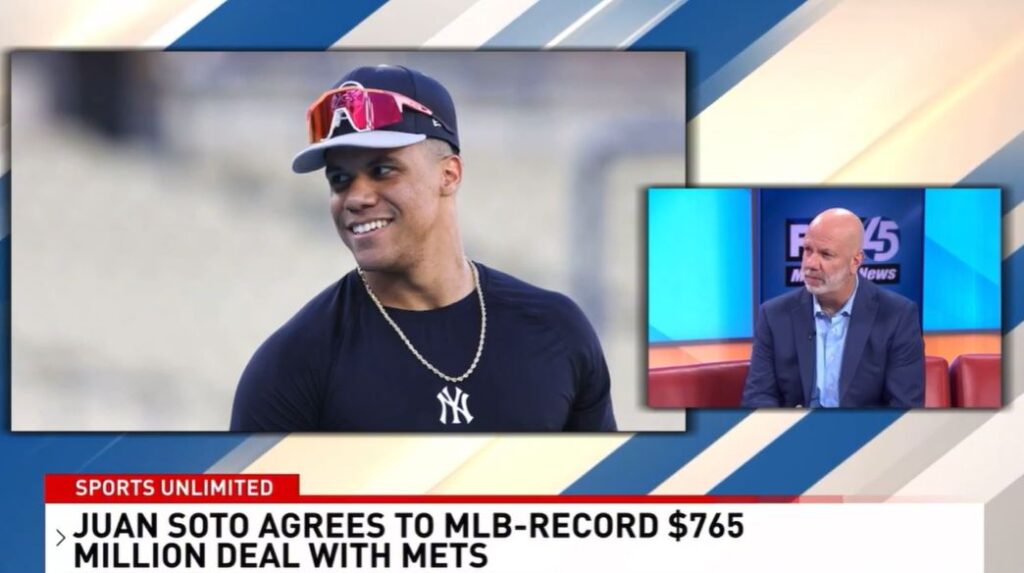
The Calculated Gamble of Record-Setting Deals in Professional Sports When Juan Soto inked a historic 15-year, $765 million contract with the New York Mets, it wasn’t just a headline—it was a masterclass in strategic investment. As a crisis leadership expert, I understand the high-stakes decisions organizations must make when allocating substantial resources, whether in sports, business, or government. In professional sports, contracts like Soto’s go beyond mere performance metrics; they are calculated gambles aimed at driving both tangible and intangible value for the franchise. Balancing Performance and Business Strategy Sure, the Mets are eyeing a World Series trophy. But this record-setting deal is about more than winning games. It’s a business decision designed to generate multiple revenue streams that extend beyond the playing field. For example: Ticket Sales: The Mets saw a 15% increase in season ticket purchases within weeks of the deal’s announcement. Merchandise: Following Lionel Messi’s move to Paris Saint-Germain, the club reportedly sold over 1 million jerseys in the first year alone. Similar surges are expected for Soto-branded Mets merchandise. Sponsorships: Teams like the Los Angeles Lakers saw a 30% growth in sponsorship revenue after signing LeBron James. The return on investment (ROI) from a star player like Soto can ripple across the organization. The question isn’t just whether Soto will perform but how the organization will leverage his presence to elevate its brand and operational performance. The Risks of High-Stakes Contracts However, such contracts come with inherent risks. Professional athletes are not immune to injuries, performance declines, or off-field controversies. The Mets—like any organization making a major investment—must account for these uncertainties. The story of Chris Davis with the Baltimore Orioles is a cautionary tale: a lucrative deal that eventually became a burden due to declining performance. Similarly, JaMarcus Russell’s tenure in the NFL showed how high expectations can crumble under the weight of poor execution and leadership gaps. But it’s not all caution and concern. Examples like LeBron James and Tom Brady demonstrate how strategic investments in high-caliber athletes can redefine a franchise. James’ moves across the NBA and Brady’s Super Bowl win with the Tampa Bay Buccaneers showcase how the right player, coupled with the right organizational culture, can deliver extraordinary returns. Leadership and Culture Are Key Beyond the numbers, the impact of a record-setting player on team dynamics cannot be overstated. A star athlete’s presence can motivate teammates, attract top talent, and energize fans. For instance: Team Morale: Tom Brady’s leadership was credited with elevating the entire Tampa Bay roster to a Super Bowl victory. Fan Engagement: Juan Soto’s signing has already increased the Mets’ social media engagement by 25%, according to early reports. However, disproportionate salaries can also create resentment or destabilize team culture if not managed effectively. This is where leadership plays a critical role. The most successful organizations foster an environment of collaboration and shared purpose, ensuring that high-profile contracts serve as an inspiration, not a source of division. Proactive Risk Management for Long-Term Success Smart franchises understand that these contracts are as much about planning for the worst as they are about celebrating potential success. Structured contracts with performance incentives, insurance policies, and contingency plans can mitigate risks. Transparent communication with fans and stakeholders further ensures that everyone understands the rationale behind such deals, maintaining trust even during challenging times. For example: Performance-Based Incentives: Zion Williamson’s NBA contract includes clauses tied to his physical fitness and game availability. Insurance Policies: MLB teams often purchase insurance to recoup some costs if a player is sidelined due to injury. A Blueprint for Success At Fallston Group, we often say that leadership is about turning potential crises into opportunities. Juan Soto’s record-breaking contract is a calculated gamble, but it’s one that’s rooted in sound business principles. The Mets are not just betting on Soto’s performance; they’re betting on their ability to maximize the value of his presence—on and off the field. For organizations making similarly high-stakes decisions, the key is preparation, transparency, and a relentless focus on the big picture. Whether you’re managing a sports team, a business, or a nonprofit, the principles of risk management and strategic leadership remain the same. By aligning investments with organizational goals and preparing for every outcome, you’ll not only weather the storm but thrive in its aftermath. Fallston Group, helps organizations navigate high-stakes decisions with confidence and clarity. If your team is facing a critical moment, let’s talk about how we can help you turn risks into rewards.
Fallston Group’s Crisis Management Tactics: Lessons from “The Morning Show”

Apple TV’s “The Morning Show” serves as a riveting case study in crisis management. This show provides a real-life look at what organizations turn to Fallston Group for, where protecting and enhancing reputations is at the forefront of every leader’s day. Let’s explore the critical lessons we can draw from this series and how they align with our expertise at Fallston Group. 1. The Imperative of Transparency The firing of the show’s anchor due to serious allegations sets off a chain reaction, which was poorly managed by the network, whose attempt was to obscure details. This lack of transparency only escalates the crisis. Fallston Group’s Approach: Our team emphasizes that transparency is not just about honesty but building trust. We counsel our clients to be forthright and clear in their communications, addressing issues head-on to prevent misinformation and speculation. Our tailored strategies ensure that clients maintain credibility even under intense scrutiny, and most of our most important principles is: “Never do anything to disrupt your integrity.” 2. Swift and Decisive Action The show’s depiction of delayed responses highlights the consequences of hesitation. In crisis management, time is of the essence. Fallston Group’s Approach: We strongly advocate for immediate and decisive action, with a key point of completing proactive training and having readily available documents so an organization knows how to respond without delay. Our crisis response teams are trained to quickly assess situations and implement effective strategies. Whether it’s a public statement, internal action, media relations, board alignment, etc., velocity and precision are our hallmarks, focusing on what we can control to ultimately tell the story. 3. Effective Internal Communication Chaos reigns when internal communication fails. The confusion and fear among staff are palpable and counterproductive. Fallston Group’s Approach: Our experienced team understands that effective crisis management starts from within. We develop comprehensive internal communication plans to keep employees informed, engaged, and aligned. This mitigates internal panic and strengthens the organizational front against external pressures. 4. Empathy and Support for Staff The emotional impact on the show’s characters underlines the importance of addressing the human element in crisis situations. Fallston Group’s Approach: We always look through the lens that emphasizes compassionate crisis management. Recognizing the emotional toll on employees, we provide resources and support systems to help them navigate challenging times. Our holistic approach ensures staff feel valued and supported, maintaining morale and productivity. Clients have often told us that they appreciate the fact that we immerse ourselves into the lives of the client and become an extension of their Leadership Team. This is crucial for us, as you don’t spin your way through crisis, you lead your way through the storm. 5. Controlling the Narrative “The Morning Show” demonstrates the power struggles inherent in narrative control. A fragmented message can exacerbate a crisis. Fallston Group’s Approach: “If you don’t tell your story, someone else will. And when someone else tells your story, it certainly won’t be the story you want told.” – Rob Weinhold, Fallston Group CEO. We take a proactive stance in controlling the narrative. Fallston Group’s team crafts cohesive and consistent messages that resonate with all stakeholder groups. By maintaining a unified voice, we help our clients steer the conversation, reducing the risk of misinterpretation and rumor proliferation. 6. Long-Term Trust Rebuilding The series shows that regaining trust is a marathon, not a sprint. The characters’ journey to rebuild trust mirrors real-world challenges. Fallston Group’s Approach: Rebuilding trust requires a strategic, long-term commitment. This is why we always tell our clients, you must be continuously making deposits in your reputational piggy bank, as we know that there may be a time we have to make a small withdraw. At Fallston Group LLC, we develop tailored strategies that focus on sustained efforts to regain and strengthen trust. Through continuous engagement and transparent communication, we help our clients restore their reputations over time, for the greater good of the organization and whom it serves. Conclusion Apple TV’s “The Morning Show” offers a dramatic yet realistic depiction of the intricacies involved in managing a crisis. The lessons from the show reinforce the importance of transparency, swift action, effective communication, empathy, narrative control, and long-term trust rebuilding—principles that are deeply ingrained in the ethos of Fallston Group. We are dedicated to guiding our clients through the turbulence of crises with expertise and care. For specialized crisis management strategies tailored to your needs, contact us today.
Fallston Group’s Core Principle – “Reputation leads to Trust and Trust leads to Valuation.”
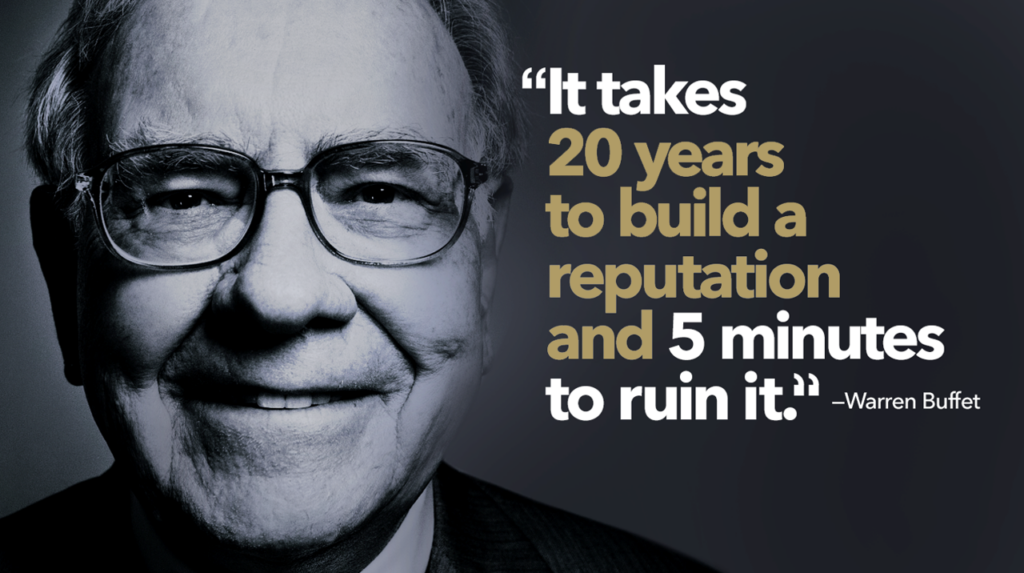
Few names resonate with as much reputational equity as Warren Buffett. Often recognized for his famous quote “It takes 20 years to build a reputation, and 5 minutes to ruin it.” At the heart of Warren Buffett’s enduring success lies a profound dedication to his craft, one that extends far beyond mere financial prowess. As we say at Fallston Group – “Not all currency is financial.” It’s a dedication rooted in the cultivation and preservation of your reputation, one built on trust, transparency, and ethical principles. Central to Buffett’s reputation is transparency. Berkshire Hathaway’s annual shareholder letters, eagerly awaited by investors worldwide, are a masterclass in candid communication. Buffett doesn’t shy away from discussing failures or mistakes, viewing them as opportunities for learning and improvement. This transparency fosters trust and reinforces his reputation as a reliable steward of capital. Buffett’s philanthropy is as legendary as his investment prowess. His pledge to donate the majority of his wealth to charitable causes is a testament to his commitment to society. By leveraging his wealth for the greater good, Buffett further burnishes his reputation as a responsible global citizen, leaving a legacy that transcends financial success. Warren Buffett’s name will forever be etched in gold. Yet, beyond his staggering wealth and market acumen lies a deeper lesson – the importance of reputation. Buffett’s success isn’t just measured in dollars but in the trust and respect he commands. In an age where reputation can be fleeting, Buffett’s enduring legacy serves as a beacon of integrity and a timeless reminder of the enduring value of a sterling reputation.
Peloton’s Lack of Planning

Amid the height of COVID in 2020, Peloton’s stocks skyrocketed and increased by almost 440%. While many consumers were investing strongly in at-home workout machines, Peloton continued to advance its business goals by producing more, creating a wider variety of product, and making business decisions for 2021 and the years so come. Ah, the power of business planning – where did Peloton go wrong? In 2021, stocks dropped 76% and most recently in Q4 of 2021, the numbers were their lowest growth quarter ever. Now, the CEO is under fire as Peloton is halting production in 2022 to remodel their production, prices, finances, and business plans to reflect a more accurate valuation, as COVID numbers decrease and people are going back to work and have less of a need for at-home fitness equipment, especially when gyms are opening back up world-wide. Many competitors have emerged in the marketplace, most notable – Lululemon and NordicTrack. The bottom line, Peloton projected their numbers at their highest value point and quite frankly, didn’t do what we tell every client – “plan for adversity”. It seems like common sense and can be seen as naïve to think production would maintain at the momentum it was during a time where everyone was forced to stay indoors, but the mistakes were made and now their reputation is on the line. Peloton is currently laying off employees and closing stores due to their misjudgment on projections and finances. Right now, the CEO is denying that they are halting productions but gave a vague statement regarding their efforts towards increasing margins and improving costs for the company (which creates a very selfish image). Wall Street and the court of public opinion are not reacting well. What could have been done differently and what can they do in the future? Peloton failed to plan for a time in which competitors and adversity would cast a shadow on their product. The mishaps in production and projections were discovered early enough to make changes sooner, and this was a smoldering issue that the corporate offices new about and tried to do small things to change a big mistake. They began to slash prices, sacrifice quality, but then increased prices for delivery and set up; it was a complete scramble to correct margins. There was a complete disregard to consumer impact, and people began to learn the smoldering issues of Peloton very quickly. There is a trust that the court of public opinion shares with companies, especially those that align themselves with that organization and actually work for them. These very people are being laid off due to the corporate failures, and the court of public opinion is waiting to see how they will handle it. Peloton needs to be transparent, take responsibility for their miscalculations, and ultimately ensure that the corporate office, the stores, employees, and consumers are all aligned in how they are going to maintain integrity and the steps they will take to prevent this from happening in the future.
Reputation leads to Trust and Trust leads to Valuation… And, Not All Currency is Financial.

Successful leaders and organizations understand the value of building, strengthening, and defending their reputation. Reputation is defined as: the beliefs or opinions that are generally held about someone or something. If we take a broader look at society, we believe that consumers are morally aligned with the brands they invest in and purchase from, more than they ever have before. In fact, 92% of millennials prefer to purchase from companies they feel are ethical….and 70% of them will pay more for products and services from socially responsible companies. So, the question is…what is the real value of investing in your reputation? Our answer, priceless. It is crucial to establish a business with a healthy foundation that embraces sound leadership, strategy, and communications tenants, and enables a transparent relationship with your workforce and consumer base. The court of public opinion is interested in who you are and what you have to say as a brand – especially when crisis occurs. Remember, the court of public opinion renders judgments much more quickly than any other ‘court.’ Not too long ago, Wells Fargo was leading the headlines for creating fraudulent savings and checking account on behalf of clients without their consent. What happened? Misreported sales numbers, billions in settlements, significant stock underperformance, and a change in leadership at the top. In a different but related event with Boeing, investigators found faulty 737 Max designs and training manuals which contributed to hundreds of deaths and grounding of hundreds of aircrafts. Once the news broke, their CEO was terminated and numerous layoffs occurred. The lawsuits began to pile in, $18 billion earnings loss (2019), and again a significant drop in the stock price. We tell every client, “reputation leads to trust, and trust leads to valuation – and remember, not all currency is financial” – because it’s the truth. By creating a strong relationship with your stakeholder base, and proactively telling your story, you can maintain a brand with a healthy reputation that is essential for success in today’s world.
Naomi Osaka – Authenticity

The French Open (FO) is one of the most prestigious Grand Slam tournaments on the ATP tour. The FO is played on clay courts, and players from all over the globe take great pride in participating. Serena Williams, Sofia Kenin, Novak Djokovic, Rafael Nadal, Roger Federer were participating, but where was Naomi Osaka a few weeks ago? Who is Naomi Osaka and why isn’t she continuing to participate in one of the most famous tournaments in the world? Naomi Osaka is the highest-paid female athlete in sports history. Osaka now dominates the WTA as she sits #2 in the world. She is well known for her flawless tennis play on court, but Osaka’s stance as a civil rights activist while discussing issues of racism, social consciousness and mental health has shaped her reputation. Osaka brands herself as an athlete who uses her platform and global following to deliver messages about her beliefs. Philosophically, she aligns closely with other athletes who vowed to do the same thing, including Lebron James, Colin Kaepernick and Megan Rapinoe. When the news broke that Osaka would not conduct any post-match interviews with the media to draw awareness to mental health, and more specifically mental health issues amongst athletes that are directly triggered by the media, it was nothing new. And the league knew they had to respond to enforce their rules and regulations. The WTA decided to fine Osaka $15,000 for not participating in the post-game interviews. Shortly thereafter, Osaka withdrew from the tournament and tweeted she was “taking some time away from the court now.” This created a wave of concern across the sports world and many athletes responded to Osaka with sympathy and support. Osaka did what many big brands often don’t do – embrace authenticity. Osaka may have lost money from not participating in the FO, but not all currency is financial – Osaka gained tremendous personal and professional reputational equity by taking this stance. Osaka made a very impactful decision that she did out of pure genuineness and passion. She stayed true to herself and her brand. Osaka’s mission to shed light on mental health amongst athletes enabled her to further establish her own identity; and, many prominent leaders commended for her braveness. Big brands like Adidas, Nike, Beats by Dre, GoDaddy, Nissan and others supported Osaka. They realized the importance of her authenticity and the issues at hand. We always tell our clients to be authentic and follow your North star – integrity is paramount. Corporate social responsibility is alive and well, this includes personal brands, like Osaka. Consumers want to align with brands with similar values. You can be certain the court of public opinion will vote with their voices, their feet, and their wallets. We commend Osaka for taking a bold, needed stance and hope that all involved with professional and amateur sports recognize the pressures athletes feel both on and off ‘the court.’ That said, recognizing is not enough. Those who support athletes at all levels must do everything possible to protect each athlete’s mental health. This includes managing the court of public opinion, whether on a television network or social media platform. For more information about managing the court of public opinion, contact Fallston Group at info@fallstongroup.com.
