

The Time to Build Your Strategic Recovery Plan is NOW

Recently, The Washington Post reported more than 10 million Americans filed for unemployment benefits in March 2020. A lot of people are referencing what is happening in the world right now as an “unprecedented time.” That term, while a bit overused, is absolutely spot on. Truly, nothing quite like this has ever happened before, and the record-squashing number of people filing for unemployment is one example that proves it. None of this is easy – on anyone. But it’s a particularly hard time for business owners: people who have invested their hearts and souls into building and growing companies that up until about a month ago, were quite successful. Many have closed shop temporarily, unable to sustain this time of turmoil or forced to take a hiatus in accordance with orders that all non-essential businesses close. Others have cut back hours, reduced their workforce, or halted production and delivery of standard goods and services. How will business owners recover from this? The time to think about building your business’ strategic recovery plan is NOW. Here are some thoughts on how you can do that: Communicate with your clients and customers throughout this crisis. Even if your doors are shut, your communication lines can remain open. Keep creating touchpoints with the people you work with, who support your business, and who have historically tapped into your product and service offerings. Use your social media pages. Push out a few emails. Make some phone calls, or offer to connect via video chat. Bottom line – invest in your relationships. Find the business plan you wrote when you were first starting out. Some of the same principles and ideas that guided you on day one can guide you again. Reread your original business plan and identify what still applies, what you can repeat, and what additional opportunities make sense to pursue as you get back up and running. Remember who you are at your core – your “why?” Create a timeline that is reasonable and feasible. The reality is no one knows for sure how long this crisis will put a freeze on our ordinary lives. So, while it may not be possible to designate a “start date” for your strategic recovery plan, you can still lay out a timeline for action that makes sense and is reasonable and feasible. What can you do right now? What will you do on the day you actually re-open your doors? What will week number one look like? What tasks will be the priority for the first month? Where do you hope to be by month number three? Six? Twelve? Plan now rather than waiting. Use this time to invest, not rest. Think about what your customers and clients will need, as they are ramping back up too. We are all in this together. As you are ramping back up, chances are, your customers and clients will be doing the same. Put some thought into how their businesses will be changed by COVID-19, and what THEIR recovery plans may look like, too. How can you be part of it? How can you help them? What new business opportunities may rise to the surface? In fact, call them now to let them know you are thinking about THEIR business and you want to be part of the solution. Consider who may need you now, who didn’t need or know about you before. Think out of the box about ways you can acquire new customers, clients and identify pathways to making new connections. As they say in the great game of hockey – skate to where the puck is going, not where it is now. Find a way to give back. Understandably, it is hard to think about giving at a time when you may be struggling. But remember, giving isn’t always about cutting a check and making a financial contribution. You can give your time. You can give your ideas. You can offer support. You can help someone else make meaningful connections. Help others out and demonstrate some goodwill, in whatever ways you can. When you do, it speaks volumes about your character. We would like to hear from you about how your strategic recovery plan will take shape. What actions will you take to guide your company’s future? We encourage you to share your thoughts and ideas with us by sending an email to info@fallstongroup.com. Please include your name, title, and company name. We plan to post another blog soon, elaborating on this topic. With your permission, we would love to weave in your insights and ideas and share them with the rest of our followers. You can document it as your first act of goodwill and giving back, per #6 above!
Coming Together During Times of Adversity
More than 150,000 people across the U.S. have been diagnosed with the coronavirus. That’s more cases than any other country. The national death toll is 2,870, and rising by the hour. The numbers are just as frightening at the local level, with 1,413 diagnoses and 20 deaths reported in the state of Maryland. The impact on society, the economy, and human life as we know it is crippling, too. The number of people out of a job and consequently applying for unemployment is topping out at more than three million. Some school systems have already announced they will remain closed for the remainder of the academic years; others have extended their closure periods, causing parents of high school seniors to wonder if they will even get to see their kids walk across a stage and graduate. The 2020 Tokyo Olympics are postponed. The NBA, NHL, and MLB are shut down. Walt Disney World is closed until further notice. And the stock market? If you are invested in it, you are probably spending time every day analyzing trends and trying to decide what to do and how much risk to take. Yes, it’s a time of great turmoil, a time of great fear, and unfortunately, a time of great loss. However, it can also be a time of great unity. Locally, many people are heeding to Maryland Governor Larry Hogan’s orders to remain at home as much as possible and practice social distancing when we must venture out. But something very interesting is happening during this time of “slowed pace.” Families are going for long walks and sitting down together for daily meals. The “daily grind” has but put on “pause” and suddenly, there are enough hours in the day. More and more people are also demonstrating acts of kindness to care for their community. There seems to be a gentle and genuine understanding that we are all in this together, and that humanity is one thing that can help us through. Now let’s apply that same principle to the business world. The Fallston Group was founded ten years ago with a primary goal to help companies plan for and manage times of adversity. Like many, we are working hard every day to manage this crisis, but we are also here to be a resource for you. We believe now is the time for business owners to come together, support one another, offer ideas and solutions, and perhaps most importantly, encouragement. Stay tuned for our next blog, which will be posted later this week and will offer some strategies and recommendations for business owners on the process of recovering from crisis.
Using Digital Tools to Deepen Relationships During COVID-19

It’s safe to say COVID-19 has swept through our world and changed life as we know it. I think we are unified in hoping and praying this crisis will be resolved as quickly as it began. But the brutal reality is that none of us really know for sure how long this will last, and what the end result will truly be, particularly regarding the impact on our businesses. Here’s the thing … many businesses are closed. Some are still operating, but under circumstances that are far from normal. Business owners near and far are doing anything and everything they can to keep the companies they have worked so hard to build afloat, despite all of the uncertainty that is filling our worlds and that undoubtedly lies ahead. While we may not be launching as many new projects or generating as many new sales as would be the case in “ordinary times,” we CAN keep the names of our businesses, and the value each offers front and center – think of it this way – wake up each morning and think of what you can give versus what you can get. To that end, use your digital tools now, and in ways you’ve never considered or implemented, before. Today, the Fallston Group is sharing five tips on how you can use your digital tools to your advantage, in the midst of crisis – be it COVID-19 or other situations that impact your normal business operations. Take a good hard look at your website. Now would be a perfect time to make those updates, changes, and enhancements you have been thinking about for a while, but just haven’t been able to carve out the time for. Giving your page a refresh is always positive for your business and could be especially beneficial right now. Add meaningful content to your website. If you don’t have business news or changes to report often, that is okay. Now is an optimal time to reach out to your loyal customers and clients for a conversation about why they partner with you or support your business. Build out a few client profiles or testimonial stories that you can add to your site. It will not only create fresh, new content for your web site, but it will also inspire others out there to tap into your products and services, now or later. Remember, it’s about relationships, not returns. Consider adding a blog. Open a door to share your thoughts and perspective on business matters or even the impact COVID-19 is having on your business – authenticity is key. You can post several times per week, once per month, or whatever frequency feels right; the point is that your blog will give you a platform to share your voice while creating a series of touchpoints with your customers and clients. It’s therapeutic also! Be social the only way you really can – electronically. We have all come to know the term “social distancing” and I think it’s safe to say most of us can’t wait to put this way of life behind us. Think of it this way – physical distancing, not social distancing…do not isolate. You can still be social, electronically! Don’t have social media pages? Consider creating and launching them, and beginning the process of sharing them to build a base of fans and followers. If you already have active social media pages, start putting some thought into how you can post useful or inspirational content, or messages that will position your business well now or as we all begin putting COVID-19 behind us in the future. Your social media pages also create opportunities for touchpoints with your customers and clients, so use them, and use them well. Invest in long-term, authentic relationships with meaningful content. Think strategically about social content. To follow the tip above, don’t forget that you do need to think strategically about WHAT to post on your social media pages. Now is a good time to consider linking to relevant, informative articles. Photos with strong captions make sense and tend to catch people’s eye quickly as they scroll through their newsfeeds. You can talk ever so lightly about your programs and services, but be sure to tie those messages back to how or why they are helping or impacting your customers and clients. If you do develop client profiles or testimonial stories (per tip #2), share them on your social platforms in addition to on your website. You can also use social media to demonstrate support for other businesses you care about. Share posts from others that you feel your friends and fans may be interested in seeing. Remember to focus on what you can give within the spirit of abundance. As a firm that specializes in crisis leadership during times of adversity and crisis, the Fallston Group is here to support you as the world continues to manage this global health pandemic. It is a trying and challenging time for all. Let’s support one another and stick together, even if it’s only electronically until we get through this. Stay safe, friends.
Do You Have the Moxie to Be a Crisis Leader?
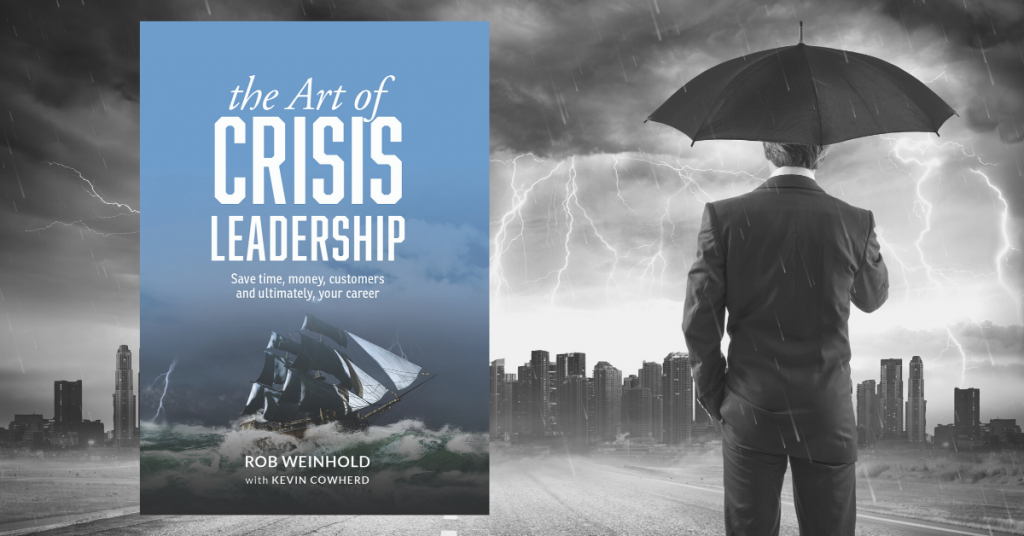
During this extraordinary time, many business leaders are simultaneously enduring two major crises – the worldwide COVID-19 pandemic and the very strong possibility of losing their businesses – a perfect storm. Many simply need an empathetic ear and a little reassurance as they try to maintain control and weather the storm. Many of these emotional conversations are connected to a timeless chapter of The Art of Crisis Leadership, a book published by Rob Weinhold, our chief executive. Chapter seven of the book highlights how one amazing leader managed his life when an unexpected crisis, which could not have been predicted or anticipated – and one that he was not responsible for, brought about life-changing approaches and opportunity. We’re sharing it because we believe it can help, just a little, during this uncertain time. If you are searching for solid content to post on your web site or social media pages, we encourage you to post this as a way to bring some encouragement and inspiration to others who may be struggling in the midst of this global pandemic. The Art of Crisis Leadership, Chapter Seven: Early one morning in 2002, when I was working at the Governor’s Office of Crime Control and Prevention in Towson, Maryland, I stopped by to see the boss. After knocking lightly on his office door, I let myself in. But this time, Stephen P. Amos wasn’t sitting at his desk as usual. Instead, I found him sprawled on the floor with his eyes closed, suffering from an excruciating migraine attack. Given what Stephen was going through at the time, the fact he was enduring skull-splitting headaches was hardly shocking. That year, soon after taking over at GOCCP, a little-known state agency that provided access to federal and state grant funds to improve public safety, Stephen’s world had turned upside down. Out of nowhere, he found himself at the center of a high-profile public corruption probe, wrongly accused of improperly using grant money for administrative purposes. As a former law enforcement officer and U.S. Justice Department official, Amos had never been under investigation, for any reason. And, based on who I knew Amos to be at his core, he would find it repugnant to subscribe to any wrongdoing (no matter the toll) if he felt he or his team were operating ethically and legally. Since the GOCCP was overseen by Lt. Gov. Kathleen Kennedy Townsend, a Democrat in the midst of a heated race for governor against Republican Robert L. Ehrlich, many suspected a political motive behind the charges. Townsend, in fact, called the probe, led by Republican U.S. Attorney Thomas DiBiagio, “political garbage.” Nevertheless, it would drag on for another three years until federal prosecutors suddenly dropped their indictment of Amos in 2005, citing an obscure legal opinion they claimed would have made it difficult to win a conviction. Thus, ended one of the most painful ordeals I have ever seen a colleague go through—a man I knew to be of the highest moral character, a man who had been unfairly targeted and was innocent of even the slightest wrongdoing. But in the months that the investigation dogged him, I also watched Amos continue to perform superbly at his job, put the well-being of his worried and dispirited staff above his own and deliver one of the most inspiring examples of crisis leadership I’ve ever seen. “A lot of tears, a lot of pain,” Stephen said of that difficult time when we met not long ago for drinks and dinner. Before the crisis hit, he continued, “a lot of my decision-making had been about what was in my best interest (and for) my career path. But I soon came to realize it was no longer about me. “I realized I had a much bigger responsibility. I had to start thinking about the larger team, how to bring them together, how to communicate that there was a future, that the sky’s not going to fall and you’re not going to crumble.” The first hint of trouble came in early 2002, as Maryland’s gubernatorial campaign entered its final crucial stages. Amos began to hear rumors of a possible federal investigation into the GOCCP. One day around that time, I received an odd phone call from Stephen. “Rob, we’re friends, right?” he asked with a slight chuckle. “Of course we are,” I said. “Well,” he went on, “do you have any idea why the FBI is in my office?” At first, he professed not to be overly concerned. The investigation, he was told by his superiors, was a fishing expedition, undoubtedly motivated by politics. He assumed the feds would ask a few questions about a grantee, someone who had gotten funding from the GOCCP, and then the whole thing would go away. “I remember talking to the staff and telling them: ‘There’s been Democrats in office since (former Republican Gov. Spiro T.) Agnew,’” he recalled. “There’s gonna be no change in parties, everybody’s got career jobs here. “See, I didn’t face the reality of it at first,” Amos continued. “I was oblivious to these kinds of political shenanigans. That’s a big lesson: face reality.” As the probe dragged on and members of the administration began distancing themselves from him, Stephen realized he had misread the seriousness of the situation. Worried and feeling alienated, he reached out to a small number of confidantes—I was honored to be one of them—to help keep his spirits up, strategize and crisis lead during an incredibly difficult time. He also eschewed the standard advice about not saying anything to the media. Instead, once “an anonymous source” leaked to the press that a probe was underway, we invited The Baltimore Sun and the other regional media outlets to go through the office files and see for themselves if there was any evidence of corruption. The tactic worked brilliantly. Soon, editorials began appearing in The Sun, questioning DiBiagio’s motives, one stating: “…it’s tough to know right now if he is pursuing credible allegations of
Effective Communication in the Midst of Crisis

At this point, it’s safe to assume that every business across America has been impacted by COVID-19. As your team is navigating this crisis and implementing strategies to best manage it, the value and importance of internal communications strategy is KEY. Keeping those communication lines open is so very important – more so now than probably ever before. At the same time, bear in mind that everyone is working through unusual, unfamiliar circumstances. Those who typically see 100 emails per day in their inboxes might be seeing double that or more. That said, equally important at this juncture is prioritization of internal information exchanges. Streamlining communication processes will help your team to operate as efficiently as possible during this critical time. At Fallston Group, we recommend implementing the following general internal communication protocols and guidelines within your business: Communicate with purpose. Send updates only when they contain new or time-sensitive information, or answers that the team is relying on and needs NOW. Be selective in who receives your messages. Think strategically about the message you are sending and who really needs to see it. Include only those individuals on your distribution list. Halt the automatic “reply to all.” Everyone who received a message might need that message. Chances are, not every person on the list needs to receive every reply, in turn. Consider this as you craft your reply and right before you hit the “send” button. Keep it brief. Whenever possible, send emails that are concise and easily digestible – a “quick read” approach, per say. At a time when everyone is overloaded with critical priorities, it’s more likely that a quick paragraph will be read than a message that is a full page long. Cover more than one topic in a single email, whenever possible. Brevity is key and it is more efficient to send one email that conveys priority information on 2-3 topics rather than a separate email per topic. Save the message for the next meeting, if possible. Before you craft a message and hit the “send” button, pause and ask yourself if the information MUST be transmitted via email, at that moment, or if it can instead be communicated at the next team meeting. If it can wait, hold it. Assume everyone is grateful. By nature, if someone sends us an email, we are inclined to hit the reply button to thank them for the information they have provided. At this point, we can assume everyone is working hard is grateful for the collective effort. We can cut down on email overload significantly by eliminating replies of “thanks” or “got it.” We encourage you to adopt and share these protocols and guidelines throughout your organization, so that we can all work as efficiently as possible in the coming days, weeks, and months. Stay safe. Stay well.
Protecting Your Business from the Threat of Coronavirus

What’s becoming clear very quickly is that fears and anxieties associated with a potential coronavirus (COVID-19) outbreak in the U.S. are increasing. As our newsfeeds continue to fill with updates from trusted media sources and health experts, the communications team at the Centers for Disease Control and Prevention (CDC) is doing a stellar job keeping us all informed about the status of this threatening health epidemic around the globe. The virus has quickly spread from its place of origin in Wuhan City, China, to more than 50 other destinations, including the U.S. And yes, it’s scary. The CDC recently released an informational fact sheet that can be a good resource for all of us to reference and share, as questions and concerns continue to rise. Fallston Group has attached that document for your convenience. Over the past couple of days, Fallston Group has fielded a handful of phone calls and inquiries from our clients and partners, all looking for advice and guidance on how to be proactive in minimizing risks within their businesses. So, today’s blog post is designed to share our non-clinical thoughts and recommendations with the masses. Our hope is that the information we are disseminating will help you take the necessary precautions to keep your workplace safe. According to health experts, the symptoms associated with the coronavirus are mild to severe respiratory conditions, often leading to a persistent cough, shortness of breath, and a fever. Let’s remember, however, that it’s early March. Everywhere you turn right now, you see someone battling these symptoms, otherwise considered status quo as part of what many of us assume is the common cold or even the flu. How do we really know? We don’t. That said, now, more than ever is the time to be cautious. A few specific recommendations we’re passing along, derived from health experts: Don’t assume those nagging symptoms aren’t anything to be worried about, or that they will eventually fade away on their own (let’s face it – we’ve all been there). If members of your team are experiencing these symptoms, encourage them to check in with their doctors, without delay. It may even be worth mentioning that they can schedule the appointment during work hours if needed, without clocking out. Make it very clear to your team that you do not want them to come to work when they are feeling under weather or experiencing symptoms similar to those associated with coronavirus. Every manager is different, but one client of ours has temporarily adjusted their sick leave policy, allowing their people to make-up hours or days during non-traditional work hours. They are even implementing remote work protocols. Some may say this is excessive. I personally believe it’s smart. Your people need to know that keeping your workplace safe and healthy is a top priority right now. But don’t just say it. Show it. Remind everyone you work with, or who passes through your workspace, that handwashing is KEY to preventing the spread of germs. Yes, everyone already knows that. Tell them again. And then maybe one more time. The CDC is also encouraging people to try to avoid touching their eyes, noses, and mouths as much as possible. Give your team members the right tools to help keep your workplace clean and healthy. Pick up some additional boxes of tissues, some extra bottles of hand sanitizer, and a few tubs of disinfectant wipes. Position them plentifully around the office, and encourage people to use them frequently. Make it easy for folks to do their part in reducing the spread of germs, and they probably will. Now … what to do if you suspect the coronavirus has entered your workplace? That’s a tricky question because it depends on the nature and size of your business, as well as what specifically is happening that has caused alarm. If possible, close the office for the day, and ask that each member of your team – even those demonstrating no signs or symptoms of illness – see a primary care or urgent care physician, immediately. This recommendation is based on the fact that the CDC believes most people impacted by this virus will present with symptoms two to 14 days after exposure. Hopefully, all members of your team will return the next day with a confirmation of a clean bill of health. Again, some may feel this is excessive. My opinion is that it is better to be safe than sorry. Some businesses are even calling in additional cleaning and disinfectant crews to add an extra layer of protection during off-hours. I encourage you to visit the CDC web site frequently for information and updates. You can access it here. All of us must be informed, share what we know and take action. Stay safe. Stay well. And let’s all do our best to stay healthy.
Resilient Leadership: BP and its Fallen Leader

A Perspective about BP and its Fallen Leader by Rob Weinhold When we learned of the Gulf oil explosion in April 2010, the loss of life coupled with the hourly projections about environmental fallout was disturbing enough. However, to learn that BP had no real crisis plan or immediate solution to deal with this type of incident immediately instilled a sense of anger among many stakeholders. One of the biggest “eye brow raising moments” early on was to watch BP executives on NBC’s Today Show respond to a question/statement by an anchor during an interview. The question to the executive was “You had no crisis plan to deal with this, did you?” Well, the executive did not answer the question and quickly directed his response in another direction, never answering the “yes or no” question. Clearly, BP was at a loss on how to handle this catastrophic, yet predictable event. It is true, based on the continual resulting blunders that BP did not have a handle on how to effectively communicate with all of its stakeholders during the worst oil spill in U.S. history. Adversity is the truest test of leadership and BP failed the test due to poor planning and execution. The very basic tenants of crisis leadership did not present themselves in this case. While many suffered, top executive Tony Hayward gave the public impression that he cared more about how his life was disrupted than the millions who depend on BP from a financial or livelihood standpoint. Comments Mr. Hayward made about how he “wanted his life back” or how he minimized the leak because the leak was occurring in “a big ocean” were bad enough, but the symbolic participation in a yacht race during a time of crisis sent the wrong message to many whose quality of life still remained in the balance. While Mr. Hayward apologized and made later attempts to explain his comments and actions, the court of public opinion already rendered a verdict. Of the many milestone events which ultimately led to Mr. Hayward’s dismissal, one particular event negatively impacted his career, BP’s stock and sent the BP brand cascading downward like no other. That event was the Congressional hearings where all company executives involved decided to point the finger at one another. The resulting public message was a failure to take responsibility. In fact, the President of the United States stood-up and said he was “not impressed” by that spectacle. Yes, now the leaders of three major corporations were being admonished publically by the World’s most influential leader. Main Tenants of Resilient Leadership The fact is, during times of crisis, leaders become fatigued and often misstep. In BP’s case, Hayward didn’t have what Dr.’s George Everly and Doug Strouse refer to in their book (The Secrets of Resilient Leadership, 2010) as Behavioral Body Armor. As highlighted in the book and many other publications, resilient leadership has a few main tenants which should never be violated. They include: 1. Act with integrity 2. Communicate effectively 3. Display optimistic, decisive leadership 4. Take responsibility for actions 5. Build a resilient culture 6. Develop behavioral body armor I wholeheartedly recommend that leaders at every level of management in both the public and private sector, personally or professionally, embrace these principles. Had BP crisis planned before the incident, been forthright with information and followed the six basic tenants above, we all might have a different perspective.
Top Ten Tips After Navigating Ten Years of Crisis

Fallston Group, the Baltimore-based, global reputation agency, is celebrating its tenth year of building, strengthening and defending reputations. Outside of highlighting the basics – operating with integrity, taking responsibility and being decisive – chief executive Rob Weinhold offers his top 10, in-depth pieces of advice to successfully manage a crisis based on decades of experience helping people during their most difficult times: Be predictive. Organizations must be predictive and create organizational muscle memory through extensive assessment, policy development and training. Organizations who evaluate their company-based and industry threats cycle through crisis more quickly and are bigger, faster, stronger after their defining moment. Tell your story. If you don’t tell your story, someone else will. And, if someone else tells your story, it certainly won’t be the story you want told. A crisis rarely “goes away” – be transparent and get in front of the media and general public versus refusing to comment. The ability to tell your story is your most important growth strategy. Find the points of leverage. Understanding what motivates all parties involved in crisis will drive outcomes, and a win-win, if possible. This sounds simple, but it’s not. There are always points of leverage in an adversarial situation – find them and focus. Know what motivates people who behave badly. The five core primal drivers I’ve observed include power, control, money, sex and revenge. Be wary of people who are strictly motivated by one or more of these drivers. Or, use it to your advantage. Reframe your public remarks, if misunderstood. Every single person I know has at some point misspoken or has not articulated a point in an optimal manner – reframe vs. denying, debating or being offended. Remember, the general public, not a reporter, is the ultimate consumer of the information you are attempting to convey. Above all else, the most important message is the message received. Admit you are in crisis and connect to your trusted advisors. Most people don’t want to admit they are in crisis and steadily losing control – do this quickly as your window of opportunity will close quickly. Whether your personal obstacle is ego, complacency, embarrassment or uncertainty, get over it. Admit you are in need and seek the opinion of those you trust. Remember: tired + wired = fired! Spread the pain to those who are cerebral, not emotional. Command the facts. Too many times professionals make rash decisions and jump out on camera with either no substantive information or rely solely on the “I can’t comment on that” or “I don’t have that information” phraseology. Bottom line: if you decide to publicly address a crisis, have something important to say – and maintain a strong command of the facts. Remove the opportunists. I’ve seen it over and over again. When a leader is in trouble or wobbling due to crisis, there are very few who maintain a strong sense of loyalty to the one they serve while many others remain silent or work covertly to push the leader out the door, hoping they can sit in the big chair one day soon. When you are embroiled in crisis, it can be a very lonely, thankless road – you become a perceived liability to others who are not willing to embrace the risk, even though you may be 100% right. The DNA of the opportunist is such that their loyalty is stalwart as long as it is politically expedient to do so and ultimately advantages them and their careers. These are the wolves in sheep’s clothing. Find out who the wolves are and remove them – they are only there to facilitate your demise. Be direct. There is a tendency to soften words or not be direct with ominous news. While initially shocking, people prefer the bottom line right away. I call this bad habit “circling the messaging runway” vs. “landing the plane.” Do not circle the runway with negative or emergent news; immediately tell people what is going on. You will earn their confidence and trust more quickly. Have faith in a higher being or larger purpose. When a person is on the brink of or embroiled in crisis, keenly focusing on taking care of one’s mind, body and spirit is critically important. Spirit, in particular, becomes even more essential when people feel they’ve lost control of a situation. I’ve worked with many troubled leaders where their renewed sense of spirituality, or belief in a larger purpose, helped them navigate their storm. To learn more about Fallston Group’s anniversary and services, visit www.fallstongroup.com/anniversary.
Crisis from a Doctor’s Perspective

Guest blog authored by Dr. Diva Nagula Let me introduce myself: I am Dr. Diva Nagula, a board-certified physician, entrepreneur, author, and cancer survivor. Five years ago, when I was diagnosed with stage four non-Hodgkins lymphoma, I spiraled into a state of crisis personally, professionally, and spiritually. After my diagnosis, I analyzed my own response to this health crisis and documented techniques that worked for me to overcome cancer and change my life for the better. Here’s what I’ve learned over the years about crisis management as both a doctor and patient: The Physiological State of Crisis Crises vary by person, setting, and level of severity. Maybe your loved one passed away; your company is undergoing financial cuts and layoffs; a natural disaster struck in your region; or like in my case, you were diagnosed with cancer or another life-altering health condition. No matter what your particular crisis is, our body’s physiological response to crisis is quite similar: Rapid, shallow breathing Sweating Increased heart rate (heart pounding, or “beating out of your chest”) Slowed digestion (why you lose your appetite!) Muscle tension While natural and even helpful at times (e.g., the body’s “fight or flight” response), the physiological state of crisis is not sustainable long-term. Living in this state for long periods of time can have detrimental impacts on your psychological and physical health. For example, chronic stress often leads to mental health issues (e.g., depression, anxiety) and/or cardiovascular disease (e.g., heart disease, high blood pressure, heart attack, stroke). Fortunately, there are some simple life changes that we can make to alleviate the body’s physiological response to a crisis, and eschew the health impacts associated with chronic stress. Doctor’s Orders: Balance the Mind, Body, and Spirit During my medical training in integrative medicine, a blend of traditional and alternative medicine, I learned about the importance of balancing the mind, body, and spirit – a philosophy that ultimately led to my cancer remission and improved my overall well-being. When facing a crisis, health or otherwise, your ability to overcome it strongly depends on the health of your mind, body, and spirit. Fortunately, I was equipped with many tools to optimize my ability to overcome my crisis. Now, I’m excited for the opportunity to share these tips with others. Here are a few: Fuel your body When facing a crisis, you need to be on top of your game – this means eating foods that give you energy and avoiding foods that make you feel sluggish. Limit carbs and sugars, avoid processed foods, and take supplements as needed. Take care of your spirit When you are under significant stress, it is crucial to care for your mental and emotional health. I suggest seeing a therapist, surrounding yourself with friends and family, and finding some sense of spirituality. When in crisis, these tactics will help you make sound, rational decisions, rather than emotional ones. Tend to your mind Mindfulness, or non-judgmental moment-to-moment awareness, is one of the most important techniques to employ when you’re in crisis. Research has shown that mindfulness practices reduce the body’s physiological response to stress (e.g. increased blood pressure), decrease anxiety, depression, and exhaustion, and improve focus and memory. In my journey to remission, I used these techniques to heal my mind, body, and spirit. However, I found something even greater in the process: I found a new purpose in life. There is a reason cancer didn’t kill me, and that reason is to share my journey to better health with others. For more tips on crisis management from a health perspective, check out my new book “From Doctor to Patient” here: https://www.amazon.com/Doctor-Patient-Healing-Cancer-through-ebook/dp/B081PG4P87/ .
The Public Face of Crisis

By Rob Weinhold; as originally published in Sheriff & Deputy Magazine When a crisis engulfs your office, you will appear in front of a bank of microphones, and—with white-hot TV lights glaring and cameras rolling—stare out into a sea of skeptical media faces and attempt to deliver a timely, coherent response on behalf of your organization. And with each community meeting, speech, or media interview, you will either make a small deposit into, or a heavy withdrawal from, your reputational “piggy bank”—whose balance you hope never reaches zero. I have learned from many incredible communicators who perform spectacularly under duress. It is an art, not a science. As with wine, one gets better with age; there is no substitute for experience. The best communicators I know are obsessive about every syllable they utter, every piece of clothing they wear, and every message point they deliver. They call each reporter back, treat them fairly, and never compromise their integrity; they understand what reporters need and make themselves relevant to those who have editorial control. The best communicators also learn how to steer clear of organiza- tional jargon, are detail-oriented, and deliver news compassionately in a conversational manner that connects with those who consume their words emotionally. They are analytical, well-timed, and process loads of information almost instantaneously. And they are never too high or too low; they have a steady hand under pressure, no matter the gravity of the situation or the tightness of the deadline. In the event they run into an aggressive reporter, they can manage the situation with the grace and humility of a 10th-level verbal judo artist. If they had the God-given talent to perform on the gridiron, they’d run two-minute drills with the game on the line. And like Peyton Manning, the best are prepared, informed, and always find a way to hone their craft. You want them on your team, because they understand the big picture and see the whole room. It’s what they do best. Read more in Rob Weinhold’s recent article published in Sheriff & Deputy Magazine via the National Sheriff’s Association, and learn more about Fallston Group’s crisis & issue leadership services, including media training workshops, to help prepare your business.
