

The Power of Crisis Leadership (Part One)

The following is the first of three excerpts from a feature article, written by Rob Weinhold, Fallston Group Chief Executive, and published by “Captive International” in July 2020. Read part two here and part three here. The importance and value of crisis leadership has perhaps never been more apparent than it has been in recent years. Companies across the globe have been bombarded by one societal crisis after another. Every time a leader delivers a message—be it at a board meeting, media interview, keynote, all-staff meeting, community event, or on a social platform—the reputational piggy bank realizes a light deposit or heavy withdrawal. Thinking strategically about what the right message is and how it will resonate with many micro, diverse communities will help assure your reputational and cash balances pay incremental dividends over time. I’ve learned from many leaders who communicate spectacularly under duress. The best communicators are obsessive about every syllable they utter, facial expression, piece of clothing and message point they deliver. They’ve learned how to steer clear of organizational jargon. They are detail-oriented and compassionately deliver messages in a conversational way that quickly and emotionally connects with those who consume their words. They are analytical, well-timed and process loads of information, almost instantaneously. They have a steady hand under pressure no matter the gravity of the situation or tightness of deadline. They understand the big picture, it’s what they do best: seeing the whole room and moving people to proper perspective, balance, and action. Mishandled crises will cost you time, money, stakeholder confidence and your career. The decisions made today will be judged by many for years to come. It is impossible to spin your way through a crisis, instead you must lead the way through it. It’s not about shallow window dressing, it’s about long-term sustainable change. Real leaders emerge when the chips are down, and the stakes are at their highest. Anyone can lead when profits are high and employees are happy and motivated. After decades of helping people during life’s most difficult times, I’ve come to realize that crises are not to be feared, but rather present opportunities for growth. Reputation leads to trust and trust leads to valuation, but not all valuation can be measured in dollars. I’ve had the privilege of advising leaders in large healthcare, academia, financial, legal, entertainment and insurance organizations, along with many public, private, government and nonprofit entities who are fighting for marketplace trust and their futures. The key is to understand each organization’s navigational fix—where’d they like to be—and then chart the path forward using a deep well of instinct and experience. Crisis leadership is an art, not a science. It’s laden in nuance—a predictive mindset is not negotiable.
The Public Face of Crisis

By Rob Weinhold; as originally published in Sheriff & Deputy Magazine When a crisis engulfs your office, you will appear in front of a bank of microphones, and—with white-hot TV lights glaring and cameras rolling—stare out into a sea of skeptical media faces and attempt to deliver a timely, coherent response on behalf of your organization. And with each community meeting, speech, or media interview, you will either make a small deposit into, or a heavy withdrawal from, your reputational “piggy bank”—whose balance you hope never reaches zero. I have learned from many incredible communicators who perform spectacularly under duress. It is an art, not a science. As with wine, one gets better with age; there is no substitute for experience. The best communicators I know are obsessive about every syllable they utter, every piece of clothing they wear, and every message point they deliver. They call each reporter back, treat them fairly, and never compromise their integrity; they understand what reporters need and make themselves relevant to those who have editorial control. The best communicators also learn how to steer clear of organiza- tional jargon, are detail-oriented, and deliver news compassionately in a conversational manner that connects with those who consume their words emotionally. They are analytical, well-timed, and process loads of information almost instantaneously. And they are never too high or too low; they have a steady hand under pressure, no matter the gravity of the situation or the tightness of the deadline. In the event they run into an aggressive reporter, they can manage the situation with the grace and humility of a 10th-level verbal judo artist. If they had the God-given talent to perform on the gridiron, they’d run two-minute drills with the game on the line. And like Peyton Manning, the best are prepared, informed, and always find a way to hone their craft. You want them on your team, because they understand the big picture and see the whole room. It’s what they do best. Read more in Rob Weinhold’s recent article published in Sheriff & Deputy Magazine via the National Sheriff’s Association, and learn more about Fallston Group’s crisis & issue leadership services, including media training workshops, to help prepare your business.
The Current 5 Crises to Prep for…?
Each year, the Institute for Crisis Management publishes The ICM Annual Crisis Report – a valuable tool compiling annual news, crises analysis and trends, industry assessment and lessons on crisis prevention. The 2018 data, released this year, included five noteworthy crisis categories; some indicate a growing area of concern. If your company isn’t prepared for these types of crises, we encourage you to take note and, more importantly, take action! Mismanagement. As is most often the case, mismanagement once again topped the list as the most frequently reported crisis. With smoldering crises accounting for 65% of the incidents ICM analyzed, this tells us that leadership is aware of potential issues (or the cause of them!)…but are not adequately addressing leadership issues in a timely fashion. Cyber. Cybercrime news increased by 65% over 2017 – yet another reminder to ensure you have the proper cyber policies in place…and, consider investing in cyber insurance! Sexual Harassment. This past year, #metoo and #timesup dominated headlines. Therefore, it’s no surprise to see sexual harassment and assault incidents increaseing to nearly 10% of all crisis news. Are YOUR company’s employees protected from predators? Executive Dismissals. While still a comparatively small category, 2018 saw the most executive dismissals in the past decade. Widely-known executives who stepped down for inappropriate behavior include Papa John’s founder John Schnatter and Intel CEO Brian Krzanich; those fired for sexual misconduct include CBS’ Les Moonves and Disney’s chief creative officer John Lassiter. Labor Disputes. 2018 was “the biggest year for worker protest in decades” due to teacher strikes across the U.S. Internationally, Brazil experienced a trucker strike that impacted shipments of $1.2 billion, and western European travel experienced a significant disruption due to French rail workers walking off the job. While the digital age makes it possible for crisis to strike within seconds, ICM also reports the number of organizations with a crisis management/crisis communications plan is only at 50% worldwide. Believe us, anyone with a smart phone can wreak havoc on your brand! As you’ll often hear us say, it’s not “if” crisis will strike – it’s “when.” Learn more about our Crisis & Issue Leadership services or contact us today.
Four Simple Steps Tiger Took to Rebuild His Rep
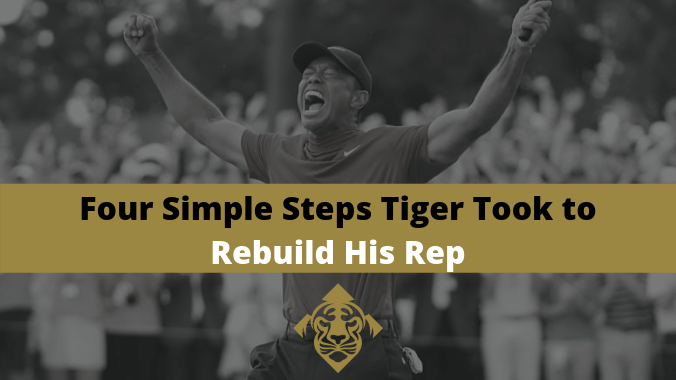
When initially hearing about Tiger Woods’ major life and addiction struggles in 2009, winning a Masters green jacket a decade later was far from realistic, in everyone’s mind. In fact, Woods said at the time he would be taking an ‘indefinite break’ from golf. How did Woods achieve one of the most talked-about come-back stories? How did he regain public and corporate support while effectively nurturing a positive reputation? It wasn’t easy – but through guided steps in taking responsibility and implementing affirmative life changes, Woods was able to, again, win the Masters. Woods’ troubles began in November 2009, driving into a fire hydrant while under the influence. Sponsors such as Gatorade and AT&T immediately dropped the golfing legend due to his misbehavior off the green. Following his poor choices, he then tore his Achilles and didn’t play a full tournament until December 2016 at the Hero World Challenge. Woods’ first step towards his eventual 2019 green jacket was apologizing to fellow players and the public via US Weekly for his embarrassing decisions – step one: recognition and public apology. Through apologizing and announcing his remorse for his wrong-doings, it allowed the public to see he acknowledged his actions, and that he recognized was a dramatic need for change. Regardless of a company’s or individual’s position in the spotlight, mistakes do happen, bad choices are made and apologies can be accepted – as long as the person is truly remorseful and doesn’t repeat the bad behavior. Step two: taking action. As we all heard when we were young, actions speak louder than words. Woods apologized, and immediately completed a rehabilitation program which prompted the progress toward becoming the pro golfer we all love. This allowed fans to applaud Woods changing his moral outlook, correcting his mistakes and creating movement toward positive change. Step three: patience and persistence. Woods did not walk out of rehab and play his best 18 rounds of golf – it took time, a long time. Tiger Woods began playing in tournaments and losing – everyone thought he was finished. Effectively laying low, apologizing publicly, making efforts towards positive and sincere change and absorbing the heat of playing bad golf all enabled his eventual rebirth – adversity is advantage. This low point allowed Woods time for regrouping and confidence building as a private person and professional golfer. Step four: learn from mistakes. Woods is now coming off of his best week of golf – winning the 2019 Masters. He used his struggles as a building block in his career. He publicly discussed his come-back story and lessons learned. This created a sense of comfort and trust for fans and sponsors. Crisis isn’t easy – but if handled correctly, can be an opportunity for long-term, sustainable growth. There is no question, Tiger’s 2019 green jacket symbolized more than simply winning the Masters.
The Lasting Effects of Shots Fired

By Leah Fertig Active and mass shooting events have been filling our news feeds recently both nationally, such as the New Zealand shooting at two mosques on March 15, and locally, including the most recent school shooting at Frederick Douglas High School in Baltimore, MD on February 8. According to published crime statistics, there were 340 mass shooting incidents in our nation last year; a total of 373 people were killed and 1,347 were injured. One would like to think that once the shock of the tragedy is over and loved ones are laid to rest or those injured are released from hospitals that the effects of mass shootings end there. Sadly, that’s not the case; there are long-lasting, negative emotional effects that continue for weeks, months and lifetimes. When it comes to mass shootings, it’s important to realize it’s not only those directly connected to a tragedy who feel the long-lasting effects. For example, the Frederick Douglas High School shooting in Baltimore did not only affect the victim who was injured, but also the entire student body and the institution’s staff, faculty and administrators. Trauma comes in many forms and is unique to each individual and how they, and their families, cope. The National Center for PTSD explains there are four phases following mass violence: Impact, Rescue, Recovery and Reconstruction (Long-Term). They state, “While the majority of affected individuals will see a lessening of distress over time in the long-term phase, vulnerable populations such as those with injury, severe disaster exposure or ongoing adversities, may continue to suffer for years after a large-scale disaster or mass violence event.” This March, we lost 3 lives to suicide that were all connected to school massacres and post-traumatic stress. Some may wear their pain on their sleeves while others may bottle it up and outwardly project that they’re not struggling inside – a struggle that has the potential to evolve into a future tragedy. There seems to be no limit to the location in which an active-shooter tragedy can occur; they happen in places we should feel the safest, such as places of worship, malls, movie theaters, concerts and schools. It is imperative for businesses and institutions to understand that although not all crises can be prevented, you can certainly prepare for those worst-case scenarios, such as an active shooter. Have you done all you can to protect your people, secure your assets and strengthen your brand? Call or email today to start building the organizational muscle memory you need to give employees the tools and confidence to survive a very high stress, sudden and volatile event. There is no question, lockdowns save lives; you must be prepared as the first order of leadership is to provide a safe place to live, work and raise a family.
Top Business Reputation Tips
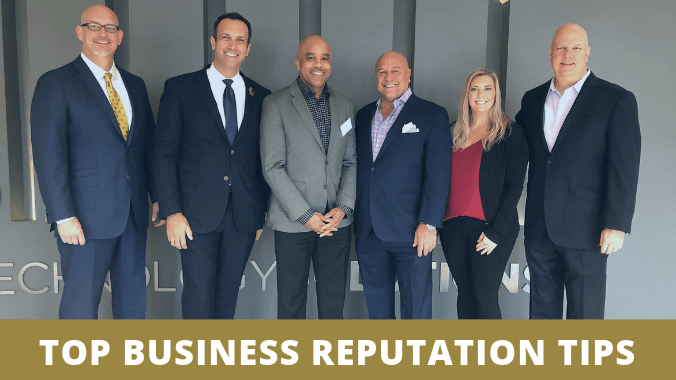
Whether or not you had the chance to attend our most recent Business Reputation Panel in person, every leader can benefit from our expert panelists’ top tips to preserve and protect your company’s reputation. James “Jef” Fagan, Principal Attorney at Offit Kurman advises businesses to not only pick a primary spokesperson – but to make certain your employees know who that spokesperson is. Legally, employees need to understand if the media calls, they should not answer any questions. If a crisis occurs, employees should be given a script for answering the phone, and direct callers to the primary spokesperson. Scott Canuel, Executive Director and Market Team Lead at J.P. Morgan explains employees must know what to expect in terms of protocol BEFORE a crisis occurs. Employees should be updated on your company’s crisis plan on a regular basis, and training must be consistent. (Fallston Group tip: this establishes organizational muscle memory and reduces stress when a crisis does occur!). Rachael Lighty, Public Relations Manager for Amazon Operations stresses that “your reputation is not a shot in time.” Your reputation must be worked on alongside your relationships with your customers and trusted advisors every single day. Think about your reputation during your everyday business decisions – it is an active ongoing process. Kai Jackson, Co-anchor at WBFF-TV Fox45 News tells us from the media’s perspective, “please know I have a job to do just like you do.” When a crisis occurs, it is extremely helpful for your company to have a point person to go to for information who can speak MEANINGFULLY about the issue. The media’s job is to report professionally and respectfully. The more substance your business can provide, the better the media will be able to represent your story. Ed Norris, radio personality and actor gives personal advice from the heart: build your relationships TODAY. And not just with your company and board’s executives, but with all of your employees. Every person matters. These relationships will benefit you in the long-term, and those people will have your back not if, but when things go sideways. Rob Weinhold, chief executive at Fallston Group, urges leaders to understand reputation leads to trust, and trust leads to valuation. And, not all currency is financial. Your reputational equity must be built BEFORE crisis strikes; your business must always be ready to make a withdrawal from your reputational piggy bank. For more information about crisis leadership strategies, how to understand your risk and how to better prepare for a crisis, contact Fallston Group at info@fallstongroup.com, call 410.420.2001 or visit our website.
When the world relies on you, how do you manage crises and continuity of care?

By Leah Fertig From birth to our final day, there may never come a time we aren’t dependent on a compassionate healthcare provider. Like the fragility of our lives, healthcare institutions are challenged with many risks that may take their focus off of critical patient care. This is unacceptable, mainly if you or your loved one is reliant on critical attention during the distraction. According to The Joint Commission, the top reported sentinel event of 2017 was unintended retention of a foreign object (URFOs), with a total of 116 cases reported. In April 2017, a California woman had abdominal surgery that resulted in an emergency return approximately two weeks later after experiencing extreme pain. During the emergency visit, doctors found the 8-inch surgical forceps inside her abdomen from the previous surgical procedure, and her small intestine looped through the surgical forceps handle. The woman had to have 18 inches of her small intestine removed. While stunning to most people, not entirely new news to those who work in the healthcare profession. As a result, a lawsuit requesting medical and incidental expenses, loss of past and future earnings, and more claims were filed by the patient. It’s not just the isolated, event-specific financial impact that’s concerning, the long-term reputation of the institution and the healthcare providers are at stake. Not only are lawsuits public record, but named parties may also eventually reach the court of public opinion where judgment is rendered on a moment’s notice. Crisis isn’t a matter of “if,” but “when.” There are thousands of law firms that focus exclusively on medical malpractice because it is considered a preventable mistake, which can ultimately lead to a wrongful death suit. While tragic on many levels, the posture of the healthcare institution and its legal counsels will impact reputation. The stakes are high as the decisions leaders make today will be judged by many for years to come. To learn more about how healthcare organizations can reduce their points of exposure and effectively lead during life’s most critical times, email info@fallstongroup.com and one of our experts will connect with you. Remember, if you don’t tell your story, someone else will. And, when someone else tells your story, it certainly won’t be the story you want told!
Organizational Muscle Memory – Why It’s Imperative!

By Rob Weinhold, Chief Executive On the cold afternoon of January 15, 2009, Capt. Chesley “Sully” Sullenberger nosed US Airways Flight 1549 into the clear skies above New York’s LaGuardia Airport. Less than four minutes later, after a “bird strike” from a flock of Canadian geese knocked out two of the jet’s engines, he coolly and skillfully made an emergency landing in the frigid Hudson River that saved the lives of all 150 passengers and five crew members, earning him international acclaim and admiration. “Within eight seconds of the bird strike,” Sullenberger wrote in his book “Highest Duty,” “realizing that we were without engines, I knew this was the worst aviation challenge I’d ever faced. It was the most sickening, pit-of-your-stomach, falling-through-the-floor feeling I had ever experienced.” As to how he was able to focus and execute his duties during one of the most compelling dramas in modern airline history, the answer—personal heroism aside—was surprisingly simple. “My life is all about routine. It’s about checklists and procedures,” he said in a training video not long after his ordeal. “Be prepared for the unexpected by doing the little things day in and day out. You ready yourself for the big things…” Clearly, what Capt. Sullenberger relied on heavily during his ordeal is a concept that I teach and call organizational muscle memory. This applies to corporations and businesses as much as it does to everyday citizens in all walks of life. In the context of preparing for, navigating through or recovering from issues of sensitivity, adversity or crisis, there’s no question that—to use the old cliché—people play how they practice. And what Capt. Sullenberger and his co-pilot did in those nerve-wracking moments in the sky high above New York, was begin working their way down the checklist of airline emergency response procedures put in place for just such an event. They were doing what they’d been trained to do and followed the protocol as it was laid out to them and drilled into their heads for decades. Immediately after Flight 1549’s engines failed, Capt. Sullenberger took over the controls of the crippled aircraft from First Officer Jeff Skiles, who began handling the emergency checklist. Sullenberger quickly focused on the three general rules of any aircraft emergency: maintain aircraft control, analyze the situation and take proper action, land as soon as conditions permit. As detailed in his book, there is also a variation on those rules that pilots find easy to remember: “Aviate, navigate, communicate.” “Aviate: fly the plane,” he wrote. “Navigate: make sure your flight path is appropriate and that you’re not flying off course. Communicate: Let those on the ground help you, and let those on the plane know what might be necessary to save their lives.” Also aiding him was this: as a young pilot in the Air Force, he had studied aircraft accidents to learn from the experiences of the pilots involved. “Why did pilots wait too long before ejecting from planes that were about to crash?” he wrote in “Highest Duty.” “Why did they spend extra seconds trying to fix the unfixable?” Sullenberger’s many flights from LaGuardia in the past had also given him an encyclopedic knowledge of the terrain he was flying over, as well as the distances to the nearest airports should he attempt an emergency landing at one. In the end, his training, military experience and geographical knowledge would help him conclude that all four nearby airports (LaGuardia, JFK, Teterboro and Newark) were unreachable by the damaged aircraft. Not to be discounted in any re-telling of what happened to Flight 1549 that day is that Capt. Sullenberger had the perfect demeanor to handle the stress of the moment. When you think about leadership, you think about composure. This was a case study in pilot composure if ever there was one. As the aircraft flight lurched and dropped through the skies, Sullenberger would write in his book, the badly shaken passengers in the quiet cabin reacted in a variety of ways. Some prayed. Some texted loved ones. A U.S. Army captain and his fiancé kissed and told each other “I love you” and “accepted death together.” A management consultant from Charlotte, North Carolina thought about how he was his mother’s only surviving son, and that his death would no doubt kill his mom, too. A man who had survived a near-deadly incident on a plane some 20 years earlier took out a business card and wrote “I love you” to his parents and his sister and thought: “This could be the end of my life. In 10 or 20 seconds, I could be on the other side, whatever the other side will be.” But Capt. Sullenberger remained calm and focused on the task at hand, which was to avert a catastrophe either above or in one of the busiest cities in the world. In any crisis, people look for direction. Absent that direction, presented in a composed manner, chaos will ensue. But there was no sense of that on Flight 1549. As he continued to struggle with the damaged plane, Sullenberger radioed air traffic control and said, in a remarkably even voice: “We may end up in the Hudson.” In fact, the aircraft was already descending below the tops of Manhattan’s skyscrapers toward the wide, sparkling river. Too busy in the early moments of the emergency to fill in the passengers on what was happening, he now intoned: “This is the captain. Brace for impact!” Attempting to control the aircraft without critical engine thrust, he nevertheless guided it to a hard, slightly nose-up landing. After that, he supervised the emergency evacuation of shivering passengers out onto the wings of the sinking plane, where they were quickly helped into a flotilla of rescue boats. Perhaps as much as any pilot in history, “Sully” Sullenberger had proven to be prepared for the ultimate crisis of his career. “One way of looking at this might be that for 42 years, I’ve been making small regular deposits in
Crisis Expert Rob Weinhold Launches National Keynote

Rob Weinhold, author and chief executive of Fallston Group, the Baltimore-based, global reputation agency, today announced a new national keynote speaking campaign, “Crisis is a Growth Strategy,” including the launch of Weinhold’s brand-new website, robweinhold.com. Over time, Weinhold has been relied upon to lead, manage, coach, teach, interview, keynote, conduct workshops and train a variety of organizations and individuals in the field of crisis leadership. After working with so many clients, his “crisis is a growth strategy” approach has not only driven dramatic results, it is the reason many engage. This is why Weinhold developed his new keynote presentation and workshop. In today’s turbulent world, the issue isn’t if crisis will occur, but when. Weinhold addresses how to prepare for, navigate through and recover from sensitivity, adversity and crisis. Through proper crisis leadership tactics, Weinhold teaches the importance of turning short-term adversity into long-term advantage. “Reputation leads to trust, and trust leads to valuation,” explains Weinhold. “By successfully leading an organization through life’s most difficult times, one can not only positively impact a company’s reputation, the organization will emerge bigger, faster, stronger than it was before that defining moment. Ultimately, more value is created.” Throughout his career, Weinhold has been recognized for his unique ability to lead by creating vision and building consensus across diverse stakeholder bases, even during the most sensitive of times. He is routinely called upon by members of the national and local news media to provide perspective on crisis leadership, public safety and strategic communications. After several decades of private and public sector leadership service, Weinhold launched Fallston Group nearly a decade ago to build, strengthen and defend reputations. “Rob is a captivating speaker who genuinely connects with his audience through practicality and humanness,” says Ragina Cooper Averella, Public and Government Affairs Manager for AAA Mid-Atlantic. “For a living, Rob helps leaders snatch victory from the jaws of defeat. His experience and instinct is simply invaluable.” Weinhold was recently elected to the Johns Hopkins Carey Business School’s Dean’s Advisory Council to support the School’s pursuit of innovation in business knowledge and learning while educating business leaders as citizens. Weinhold was also recognized as a 2017 Most Admired CEO by The Daily Record. He holds a graduate degree (MSM) from The Johns Hopkins University Carey School of Business and undergraduate degree from the University of Baltimore. A nationally published author, Weinhold’s book (The Art of Crisis Leadership, 2016) skyrocketed to become a #1 new release in Amazon’s PR and Crisis Management categories and top 100 in Leadership. He has also trained and lectured in many professional and academic settings. For additional information about Weinhold, to schedule an interview or book a workshop, contact Fallston Group’s Marketing Communications Manager Andrea Lynn at 410.420.2001 or by email at andrea.lynn@fallstongroup.com.
Crisis Strikes: Who to Call

